
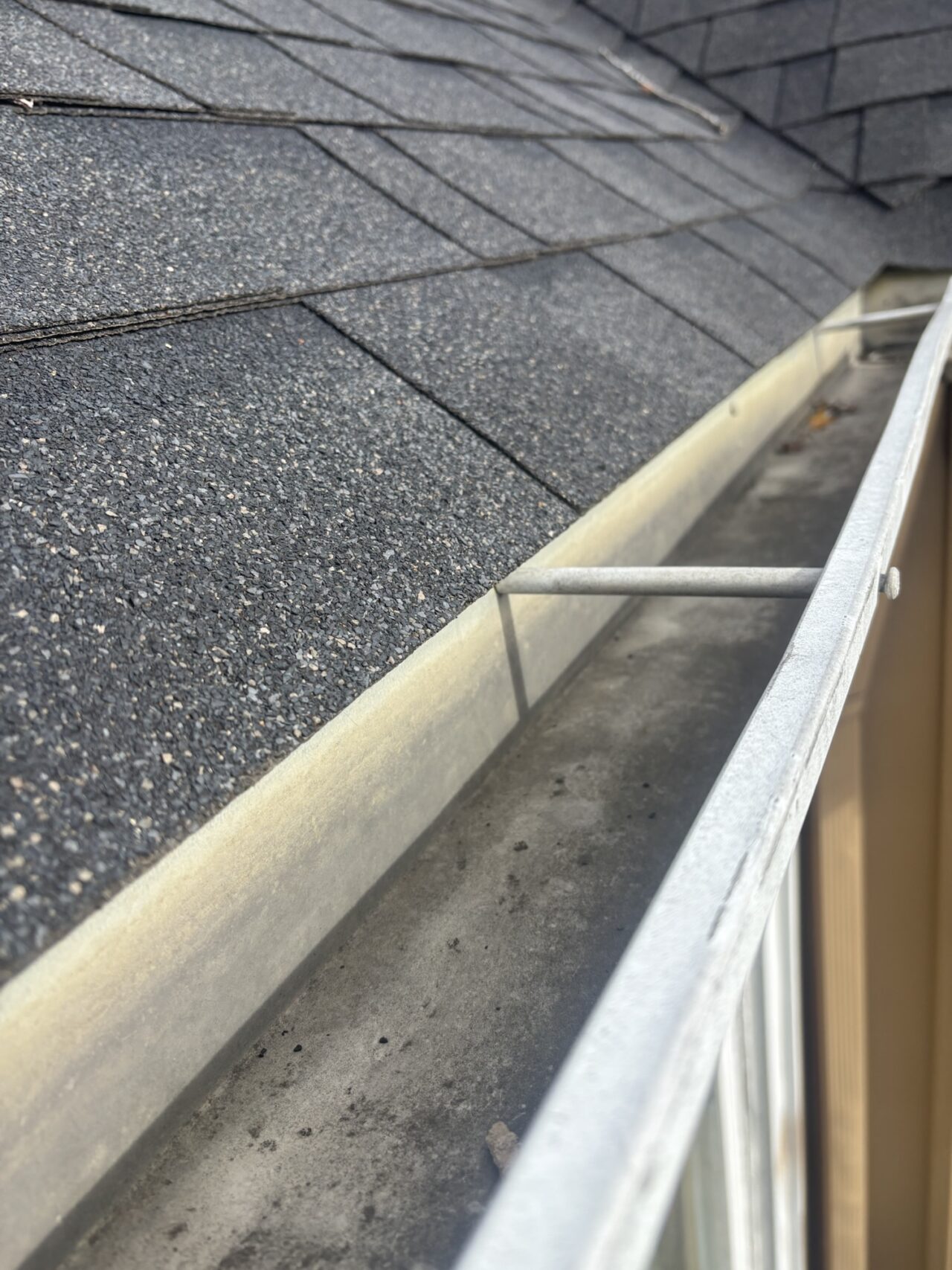
Short Answer
Heated gutter cables are worth it for one specific problem: a spot that ices up and leaks every winter that you can’t fix at the source. They don’t melt the snow off your roof. They keep a channel open so meltwater can drain through the gutter and downspout. For most houses, attic insulation and ventilation plus clean gutters fix ice dams better, and the cable has to go up before the snow, on a GFCI-protected outdoor outlet.
This box contains affiliate links. As an Amazon Associate I earn from qualifying purchases. See the affiliate note at the bottom of this post.
🛒 Helpful Picks
These are well-reviewed options to compare, not specific products I’m vouching for. Check each kit’s roof-type list and length chart before you buy.
- Roof and gutter de-icing cable kits (sold by length, with clips)
- Thermostat-controlled outdoor plug adapters that turn the cable on only when it’s near freezing
- Telescoping roof rakes for pulling snow off the eaves from the ground
Every winter I see the same thing on east side houses: a row of icicles over the front door, a gutter full of ice, and a stain on the ceiling inside. Heat cable (also called heat tape or roof de-icing cable) gets sold as the fix. Sometimes it is. A lot of the time it’s a band-aid on a problem that starts in the attic. Here’s what it really does, what it takes to install, and when I’d skip it.
What Heated Gutter Cables Actually Do
Ice dams form when heat from the house melts snow on the upper roof, the water runs down under the snow, and it refreezes at the cold overhang and in the gutter. More water backs up behind that ice and can work under the shingles.
Heat cable runs in a zigzag along the bottom edge of the roof, through the gutter and down the downspout. Warmup’s installation manual is clear about its job: it “creates a path” for meltwater to drain off the roof, it “was not designed to melt snow,” and it shouldn’t be installed to remove ice dams that have already formed or to clear the roof of snow.
So think of it as a drain line made of heat, not a roof heater.
When It’s Worth It
- One problem spot that ices up every year: a valley over a porch, a low roof under a taller one, a north-facing eave, a downspout that freezes solid.
- A house where better insulation and ventilation aren’t practical, like an old cape or bungalow with finished space right up against the roof.
- A rental or a house you can’t watch closely, where a leak would go unnoticed.
When It’s Not Worth It
- The whole roof edge ices up. That points to warm air leaking into the attic. Warmup’s manual itself says better attic ventilation and insulation can reduce ice dams, and that’s the real fix. See how to prevent ice dams.
- You already have an ice dam. Cable won’t clear it, and the manuals say not to install it over snow or ice. Here’s what to do about an ice dam you already have.
- Your gutters are clogged or sagging. Fix that first. A gutter packed with leaves turns into a block of ice whether there’s cable in it or not.
- Your roof type isn’t on the kit’s list. Manufacturers disagree here: some kits list slate, metal or flat roofs, and Warmup’s excludes them. Check the box for the one you’re buying.
What Installation Involves
Timing
Install in the fall, on a dry roof with no snow or ice. Warmup’s manual says to install when there’s no ice or snow on the roof, and only lift shingles between 32°F and 80°F so they don’t crack. If you’re reading this in January with ice already up there, it’s a job for next fall.
Layout
- A triangle zigzag along the roof edge, reaching at least one shingle row up into the warm part of the roof (Warmup uses 15-inch-wide triangles).
- Along the gutter, then down the downspout and back up. The cable has to end inside the downspout, not stick out the bottom.
- Up and back down valleys at least 3 feet.
- Only the supplied clips. Warmup says don’t staple, nail, glue or caulk the cable, and never let it touch, cross or overlap itself.
- You can’t cut or splice the cable, so buy the right length using that kit’s chart.
Power
This is where people cut corners. The manuals call for a grounded, ground-fault-protected 120-volt outdoor outlet, weather protected, close to where the cable starts. Warmup says not to use an extension cord and not to put the cable on a circuit over 20 amps or load the circuit past 80%. Emerson’s EasyHeat sheet warns that a damaged cable’s fault current may not be big enough to trip a regular breaker, which is why the GFCI matters. If there’s no GFCI outlet near the roof edge, have an electrician add one. Don’t run a cord out a window.
Running It and Upkeep
- When to turn it on: Warmup says only when snow or ice is melting and it’s roughly 15°F to 35°F out. Below 15°F not much melts, and above 35°F you don’t need it.
- Use a controller. A thermostat plug or the maker’s controller keeps it from running all week. Unplug it for the warm months.
- What it uses: Emerson rates its EasyHeat cable at about 8 watts per foot in ice. A 100-foot run is about 800 watts, so roughly 0.8 kWh for every hour it’s on. Multiply by your electric rate to see the cost. Leaving it on all winter adds up fast.
- Inspect it every fall before plugging in, and test the GFCI. Stop using any cable with cuts, cracking, charring or bare wire.
- Keep leaves and needles off it, keep it at least 12 inches from vents and chimneys, and take it down before any roof work.
Time and Difficulty
Kit install on a simple one-story eave with an existing GFCI outlet: a few hours, moderate, and it means ladder work on the roof edge. Adding an outdoor GFCI outlet or circuit: electrician work. Two-story eaves: hire it out. These are rough estimates, not specs.
Common Mistakes
- Installing it after the ice is already there.
- Running it through clogged gutters.
- Plugging it into an extension cord or a non-GFCI outlet.
- Stopping the cable at the gutter so the downspout freezes and the water has nowhere to go.
- Leaving it on 24/7 all winter.
- Using it to cover up an attic that’s leaking heat.
DIY or Call a Guy?
DIY it: cleaning the gutters, checking where the ice forms, and installing a kit on a low, simple eave if you’re comfortable on a ladder and already have a GFCI outdoor outlet nearby.
Call a pro: a licensed electrician for a new outdoor outlet or circuit, a roofer or insulation contractor for repeated ice dams across the whole roof, and anyone with the right equipment for second-story eaves. Don’t climb an icy roof.
Local to Euclid or Cleveland’s east side? I clean gutters and add downspout extensions myself, and clear gutters are step one whether or not you add heat cable. I don’t install heat cable. If you’ve got an existing outdoor outlet that’s not GFCI, I can swap it. See my Gutter Cleaning in Euclid & Cleveland page, or text me a photo at 216-800-5883.
Related Guides
- Roof snow load: when to worry
- Lake-effect snow prep for your house
- How to fix sagging gutters
- How often to clean your gutters
- Handyman Time Blocks for outlet swaps and small jobs
FAQ
Do heated gutter cables prevent ice dams?
They help by keeping a drainage path open so meltwater can get off the roof. They don’t stop the roof from melting snow in the first place. Attic insulation and ventilation do that.
Can I put heat cable on after ice has formed?
No. The manuals say to install it on a roof with no snow or ice, and that it isn’t meant to remove ice dams that are already there.
Do heat cables need a GFCI outlet?
Yes. The manufacturers call for a grounded, ground-fault-protected outdoor outlet and say not to use an extension cord.
Should I leave heat cable on all winter?
No. Run it when snow is melting and temperatures are around 15°F to 35°F, ideally on a thermostat controller, and unplug it for the warm months.
How much electricity do heat cables use?
One manufacturer rates its cable at about 8 watts per foot in ice, so 100 feet is around 800 watts while it runs. Your cost depends on your rate and how many hours it’s on.
Sources
- Warmup: Roof and Gutter De-Icing Installation Manual
- WarmlyYours: Roof and Gutter Cable Installation Manual
- Emerson EasyHeat: PSR roof and gutter cable

Scan to join our Loyalty Program, get a free coupon for your next service, and stay up to date on our services and articles.
Affiliate Note
Some of the links in this article are affiliate links. That simply means if you choose to buy through them, I may earn a small commission at no extra cost to you. As an Amazon Associate I earn from qualifying purchases. I only recommend products I trust and would feel comfortable installing in my own home or a client’s home.
If you try something I recommended and it turns out to be anything less than a five-star experience, please let me know. I always want these recommendations to be genuinely helpful.