
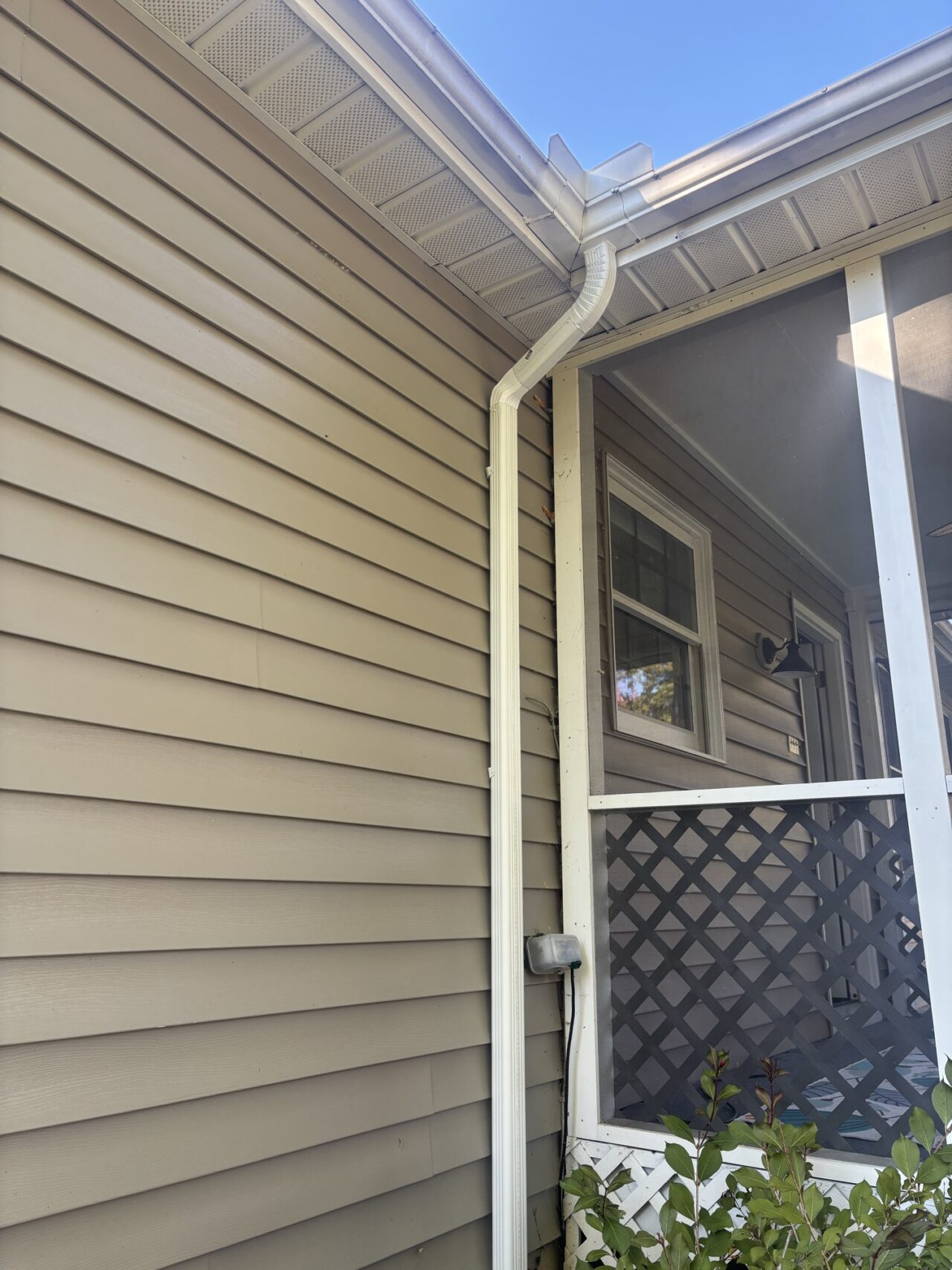
Short Answer
Yes, you can paint aluminum and galvanized steel gutters and downspouts, and it holds up well if the prep is right. Wash off the chalky film and dirt, scuff the surface, spot-prime any bare metal, then put on two thin coats of a 100% acrylic exterior paint. Skip oil-based paint on galvanized steel; it peels. In Northeast Ohio, save it for a dry stretch when nights stay above the paint’s minimum temperature, usually late spring through early fall.
This box contains affiliate links. As an Amazon Associate I earn from qualifying purchases. See the affiliate note at the bottom of this post.
🧰 What I Use + Helpful Picks
The brush, ladder and gloves are what I use on exterior trim jobs. The rest are well-reviewed options to compare, not specific products I’m vouching for.
- My Wooster Shortcut angled brush: the short handle makes it easy to cut in along the gutter lip and around brackets
- My telescoping ladder: it fits in my small Jeep and reaches the gutters I work on
- My work gloves: the best work gloves I’ve used, and gutter edges are sharp
- Maroon scuff pads for dulling the old finish without cutting through it
- An acrylic bonding primer rated for metal for bare spots and brand-new aluminum
- A ladder standoff (stabilizer) so the ladder rests on the wall, not on the gutter you’re painting
Faded, chalky gutters make a freshly painted house look tired. White gutters on a house that’s getting a darker trim color look off. And sometimes the downspouts are the one thing left that’s still the builder’s almond from 1988.
Painting them is a reasonable DIY job if you can reach them safely. It’s mostly prep, and most gutter paint failures (paint peeling off in sheets) come from skipping it or using the wrong paint on the wrong metal. Here’s how to do it right.
First: What Are Your Gutters Made Of?
The prep and paint depend on the material, so figure this out before you buy anything.
- Aluminum. Most gutters on East Side homes are seamless aluminum with a baked-on factory finish. A magnet won’t stick. Old aluminum gets a chalky film you can wipe off with your finger.
- Galvanized steel. Common on older homes. A magnet sticks. If it’s never been painted it looks dull gray, sometimes with white powdery spots (white rust). Brown rust means the zinc coating is gone in that spot.
- Vinyl. Lighter, often with snap-together joints. It takes acrylic paint, but stick to colors close to the original or lighter, since dark colors on vinyl can soak up heat and warp it.
When You Can Paint Gutters in Northeast Ohio
This is the part people get wrong here. Sherwin-Williams says the usual recommendation for latex paint is 50°F, and some of its newer exterior lines (Duration, SuperPaint, Resilience and A-100) are rated down to 35°F. Their late-season painting advice warns that a common mistake is painting on a day that hits 50°F when the night drops below 35°F. The paint needs the temperature to stay in range, and above the dew point, for a couple of days while it cures.
In practice, that means late spring through early fall. Start after the morning dew has burned off and stop early enough that the paint has a few hours to dry before the evening dew sets in. Wait at least a day after a hard rain. Whatever paint you buy, the label’s temperature range is the one that counts. I get my exterior paint from my Sherwin-Williams rep, and asking at the counter for a 100% acrylic exterior paint and a primer for your type of metal will get you most of the way.
How to Paint Gutters and Downspouts
1. Clean and repair them first
Scoop out the gutters and flush them with a hose. Painting won’t fix a leak, and a full gutter that overflows will wash down the fresh paint. Reseal any leaking seams (here’s how to fix a leaking gutter seam or corner) and rehang any sections that sag (how to fix sagging gutters) before you paint, not after.
2. Wash off the chalk and dirt
Scrub the outside faces with a stiff brush and a mild detergent solution, then rinse well. If there’s mildew, use a mildew wash and rinse again. On galvanized steel, Sherwin-Williams says to use a water-based cleaner or degreaser and to avoid mineral spirits and other solvent cleaners, because they leave a residue that keeps the paint from sticking. Let everything dry completely.
3. Scrape and scuff
Scrape off any loose or peeling paint. Then scuff the whole surface with a maroon scuff pad or fine sandpaper so the new paint has something to grab. You’re dulling the shine, not grinding it down. On galvanized, go easy so you don’t cut through the zinc. Wire-brush any white rust. If there’s brown rust, brush it off and prime that spot the same day. Sherwin-Williams’ own guidance is that severely rusted gutters should be replaced, not painted.
One safety note: if the house was built before 1978 and the gutters have old paint on them, assume it could contain lead until it’s tested. Don’t dry-sand or power-wash old paint off. The EPA’s lead page explains the risks and how to find a lead-safe certified contractor.
4. Prime where it needs it
- Bare metal, rust spots and brand-new aluminum: prime with an acrylic bonding primer made for metal.
- Sound, weathered factory finish: after cleaning and scuffing, most 100% acrylic exterior paints go right over it, but check the label of the paint you buy.
- Galvanized steel: Sherwin-Williams says most acrylic coatings stick to cleaned galvanized metal. Brand-new galvanized often has an oily or chemical coating from the factory, and paint over that peels quickly, so new galvanized needs a thorough cleaning and the right primer, or a season of weathering first.
5. Paint two thin coats
Use a 100% acrylic exterior paint. Do not use oil-based (alkyd) paint on galvanized steel. Sherwin-Williams explains that the zinc reacts with the oil binder and the paint will stick at first, then fail and peel. Brush or use a small roller on the faces, and work from the top of each downspout down. Two thin coats look better and last longer than one heavy coat that sags and drips. Most people only paint the outside face and the bottom of the gutter. Paint inside the trough just sits in water and debris.
6. Reattach and clean up
If you took the downspouts off to paint them on sawhorses (easier and neater), let them dry fully before you put them back up, and check that the elbows and extensions are tight and pointed away from the foundation.
Tools and Materials
- Ladder, ladder standoff and work gloves
- Gutter scoop, garden hose, stiff brush, mild detergent (and mildew wash if needed)
- Scraper, maroon scuff pads or fine sandpaper, wire brush
- Acrylic bonding primer for metal
- 100% acrylic exterior paint (satin is common for gutters)
- 2- to 2.5-inch angled brush, small roller, drop cloth for the plantings below
Time and difficulty: moderate. Prep is most of the work. Plan on a full day for the cleaning, scuffing and priming on an average one-story house, and another day for two coats, plus waiting on the weather between them. The ladder work is the riskiest part.
Common Mistakes
- Painting over the chalk. If your finger comes away white, the paint will too.
- Oil paint on galvanized. Looks great for a season, then peels.
- Painting late in the day in October. The dew lands on paint that hasn’t dried and leaves streaks or a soft film.
- Leaning the ladder on the gutter. It dents the gutter and smears the paint you just put on.
- Painting a gutter that should be replaced. Rusted-through steel or a bent, leaking run won’t be saved by paint.
DIY or Call a Guy?
DIY it: a one-story house where you can set a ladder on level ground, the gutters are solid, and you’re painting a similar color. Downspouts are the easiest place to start, since you can take them down and paint them on sawhorses.
Call a pro: second-story or steep-lot gutters you can’t reach safely, old painted gutters on a pre-1978 house that may have lead paint, or gutters that are rusted through or pulling off the fascia (that’s a gutter replacement job, not a paint job). If you’re not sure whether it’s worth hiring out, I wrote about when to DIY painting and when to hire a painter.
Local to Euclid or Cleveland’s east side? I paint exterior doors and trim and clean gutters myself. See my Painting Services in Euclid & Cleveland page, or text me a photo of your gutters at 216-800-5883 and I’ll tell you whether they need paint, repair or a cleaning first. If they just need cleaning before you paint, that’s my gutter cleaning page.
FAQ
Can you paint aluminum gutters?
Yes. Clean off the chalky oxidation, scuff the surface, prime any bare spots with a bonding primer for metal, and use a 100% acrylic exterior paint. A sound factory finish is a good base once it’s clean and dull.
What kind of paint do you use on gutters?
A 100% acrylic exterior paint. It flexes with the metal as it heats up and cools down, and it’s the safe choice on galvanized steel, where oil-based paint tends to peel.
Do I need to prime gutters before painting?
Prime bare metal, rust spots and new aluminum. A clean, scuffed, weathered factory finish usually doesn’t need a full coat of primer, but go by the paint label.
How cold is too cold to paint gutters?
Go by the paint can. Sherwin-Williams lists 50°F as the usual minimum for latex and rates some of its exterior paints down to 35°F, and the night temperature matters as much as the afternoon high. In Northeast Ohio, plan it for late spring through early fall.
Should I paint the inside of my gutters?
Usually no. The inside sits in water and leaves, and paint there doesn’t add much. Paint the outside face, the bottom and the downspouts.
For more on picking brushes and rollers, see the painting tools I actually use, and for keeping the gutters themselves in shape, how often to clean your gutters.
Sources
- Sherwin-Williams: Peeling from galvanized metal
- Sherwin-Williams: Exterior product application FAQs
- Sherwin-Williams: Late-season exterior painting
- Cloverdale Paint: Painting metal gutters and downspouts
- U.S. EPA: Sources of lead

Scan to join our Loyalty Program, get a free coupon for your next service, and stay up to date on our services and articles.
Affiliate Note
Some of the links in this article are affiliate links. That simply means if you choose to buy through them, I may earn a small commission at no extra cost to you. As an Amazon Associate I earn from qualifying purchases. I only recommend products I trust and would feel comfortable installing in my own home or a client’s home.
If you try something I recommended and it turns out to be anything less than a five-star experience, please let me know. I always want these recommendations to be genuinely helpful.