
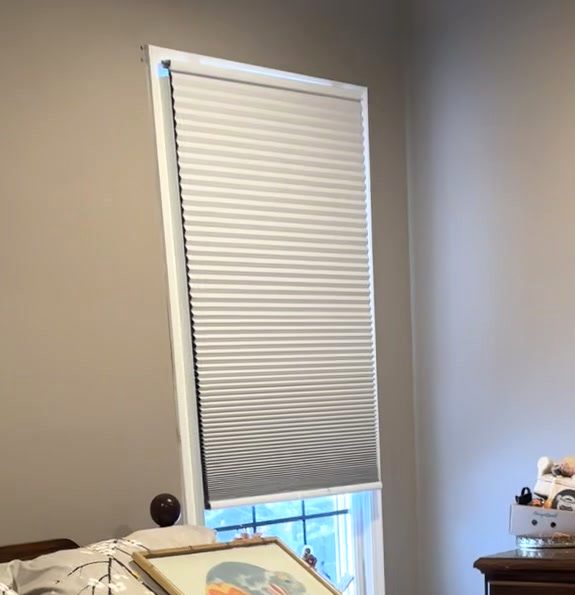
Short Answer
Decide on inside or outside mount first, then measure carefully and let the blind company do any deductions. Mark your brackets level, drill pilot holes, and screw the brackets into the wood window frame or the framing above it, using real anchors only where there’s nothing solid. Snap the headrail in, add the valance and wand, and test it. Most standard blinds take 20 to 40 minutes per window once you get the hang of it.
This box contains affiliate links. As an Amazon Associate I earn from qualifying purchases. See the affiliate note at the bottom of this post.
🧰 What I Use
These three come with me on every blinds job:
- My 2-foot level, so the brackets line up and the blind doesn’t hang crooked
- My drill bit set, for clean pilot holes in wood trim, drywall or old plaster
- My stud finder, for outside mounts where you want to hit the framing above the window
🛒 Helpful Picks
These are well-reviewed options, not my personal picks.
Putting up blinds isn’t hard, but it’s easy to end up with a blind that’s crooked, rubs the window crank, or pulls out of the wall the first time somebody yanks it. Almost every problem comes from two things: measuring wrong and mounting into nothing. Here’s how I do it.
Step 1: Pick Inside Mount or Outside Mount
Inside mount means the blind sits inside the window opening, with the brackets screwed into the top of the frame. It looks cleaner and shows off your trim. You need enough depth, though. Bali’s wood and faux wood measuring guide lists 3/4 inch as the minimum depth for an inside mount, and more if you want the blind fully recessed. Every product is different, so check the spec for the one you’re buying. Also watch for window cranks, locks and alarm sensors that stick into the opening.
Outside mount means the blind goes on the wall or trim above the window and covers the whole opening. Use it when the window is too shallow, out of square, or has hardware in the way, or when you want better light blocking and privacy. You’ll need a flat spot to mount to. The same Bali guide calls for at least 2 inches of flat surface above the window or on the frame.
Step 2: Measure (This Is Where Most Mistakes Happen)
Use a steel tape, not a cloth one, and write every number down to the nearest 1/8 inch.
Inside Mount
- Width: measure inside the frame at the top, middle and bottom. Order the narrowest number. Older windows are rarely square, and the blind has to clear the tightest spot.
- Height: measure from the top of the opening to the sill on the left, center and right. Use the longest number.
- Don’t deduct anything yourself. The manufacturer takes off a little for clearance on inside mounts. If you subtract too, you’ll end up with gaps on each side.
Outside Mount
- Width: measure the area you want covered and add overlap. Bali recommends 1-1/2 inches on each side, 3 inches total. A little more helps block light leaks.
- Height: measure from where the headrail will sit down to the sill, or lower if you want more coverage.
Going with curtains over the blinds too? Plan the rod height now so the hardware doesn’t fight.
Step 3: Check What You’re Screwing Into
This is the part that decides whether the blind stays up.
- Wood window frame or jamb: best case. Drill a small pilot hole and use the screws in the box.
- Drywall above the window: there’s usually a header in the wall above a window, but don’t assume. Check with a stud finder. If there’s nothing solid, use a good drywall anchor rated for the load, not the cheap plastic plugs that sometimes come in the box.
- Plaster walls: common in older East Side homes. Plaster cracks and crumbles if you just drive a screw in. Drill a pilot hole first, go slow, and use anchors made for plaster where there’s no wood behind it. Not sure what you have? Here’s how to tell plaster from drywall.
- Metal or vinyl window frames: some vinyl windows don’t hold screws well, and drilling into the window itself can void a window warranty or hit something you don’t want to hit. When in doubt, outside mount into the wall.
Step 4: Mark and Mount the Brackets
- Read the instructions for your blind. Bracket styles vary, and they’ll show exactly where the brackets go relative to the ends of the headrail.
- Hold up the headrail (or measure it) and mark the outside edge of each end bracket in pencil.
- Level the marks. On an inside mount, push the brackets to the same depth so the front edges line up. On an outside mount, use your level across both marks. Don’t trust the window trim to be level. In older houses it often isn’t.
- Drill pilot holes and screw the brackets in. Snug, not cranked so hard you strip the hole.
- Add center supports on wider blinds if the box includes them. Place them where they won’t hit the tilt parts or the ladder strings inside the headrail.
Step 5: Hang the Blind and Finish Up
- Slide or snap the headrail into the brackets and close the bracket doors or clips until they lock.
- Attach the valance with its clips.
- Hook on the tilt wand if your blind has one.
- Run it all the way up and down a few times. It should travel straight and stop where you let go.
- If it’s a corded blind, install the cord cleat or tension device that came with it, mounted high enough that kids can’t reach the cords.
Time and Difficulty
- Time: plan an hour for your first window. After that, most standard blinds go up in 20 to 40 minutes each. Plaster, out-of-square windows and wide blinds take longer.
- Difficulty: easy to moderate. If you can use a drill and a level, you can do this.
- Tools: drill/driver, drill bits, tape measure, level, pencil, stud finder, and a step ladder.
Common Mistakes
- Ordering an inside mount from the widest measurement instead of the narrowest.
- Taking your own deductions on an inside mount and getting light gaps on both sides.
- Screwing brackets into bare drywall with the plastic plugs from the box.
- Leveling off the window trim instead of using a level.
- Forgetting the window crank or lock and finding out the blind won’t close all the way.
- Leaving long cords hanging where a child can reach them.
Safety: Cords and Kids
Corded blinds are a real strangulation risk for young children. The U.S. Consumer Product Safety Commission’s window covering rule requires stock blinds to have operating cords that are cordless, short (8 inches or less) or inaccessible, and requires inner cords on both stock and custom products to be inaccessible or too short to form a dangerous loop. If you have kids at home or visiting, buy cordless. If you’re keeping older corded blinds, tie up or cleat the cords out of reach, and keep cribs, beds and furniture kids can climb away from windows. While you’re thinking about kid safety, make sure dressers and TVs are anchored against tip-overs too.
Use a sturdy step ladder, not a chair, and keep your drill away from any wiring you find above the window.
DIY or Call a Guy?
DIY it if you’ve got one or two standard blinds, wood window frames, and a drill. Take your time on the measuring and it’s a good beginner project.
Call someone if you’re doing a whole house, you have plaster walls, very wide or heavy shades, high windows, or custom blinds you paid real money for and don’t want to mis-measure. Pulling a blind back down to fix a bad hole means patching the wall, and if that’s where you are, here’s how to patch a hole in drywall. If your windows feel cold, check for air leaks before the new blinds go up. My guide to checking your home for drafts walks through it, and storm windows may be worth a look on older houses.
Local to Euclid or Cleveland’s east side? I install blinds, shades and curtain rods myself. See my Blinds and Curtain Installation in Euclid & Cleveland page, or text me a photo at 216-800-5883.
FAQ
Is inside mount or outside mount better?
Inside mount looks cleaner if your window is deep enough and square enough. Outside mount blocks more light, hides an ugly or uneven frame, and works on shallow windows.
Do I subtract anything when measuring for inside-mount blinds?
No. Give the exact inside measurement (the narrowest width) and the manufacturer takes off the clearance. If you subtract too, the blind will come out too narrow.
Can I mount blinds into drywall?
Yes, but use anchors rated for the weight, or better yet, find the wood framing above the window. The little plastic plugs that come in some boxes are the most common reason blinds pull out of the wall.
How long does it take to install blinds?
Plan about an hour for your first one. After that, standard blinds usually take 20 to 40 minutes each. Plaster walls and wide blinds take longer.
Are cordless blinds worth it?
If there are young kids in the house, yes. They remove the cord hazard completely, and they’re easier to raise and lower evenly.

Scan to join our Loyalty Program, get a free coupon for your next service, and stay up to date on our services and articles.
Affiliate Note
Some of the links in this article are affiliate links. That simply means if you choose to buy through them, I may earn a small commission at no extra cost to you. As an Amazon Associate I earn from qualifying purchases. I only recommend products I trust and would feel comfortable installing in my own home or a client’s home.
If you try something I recommended and it turns out to be anything less than a five-star experience, please let me know. I always want these recommendations to be genuinely helpful.