
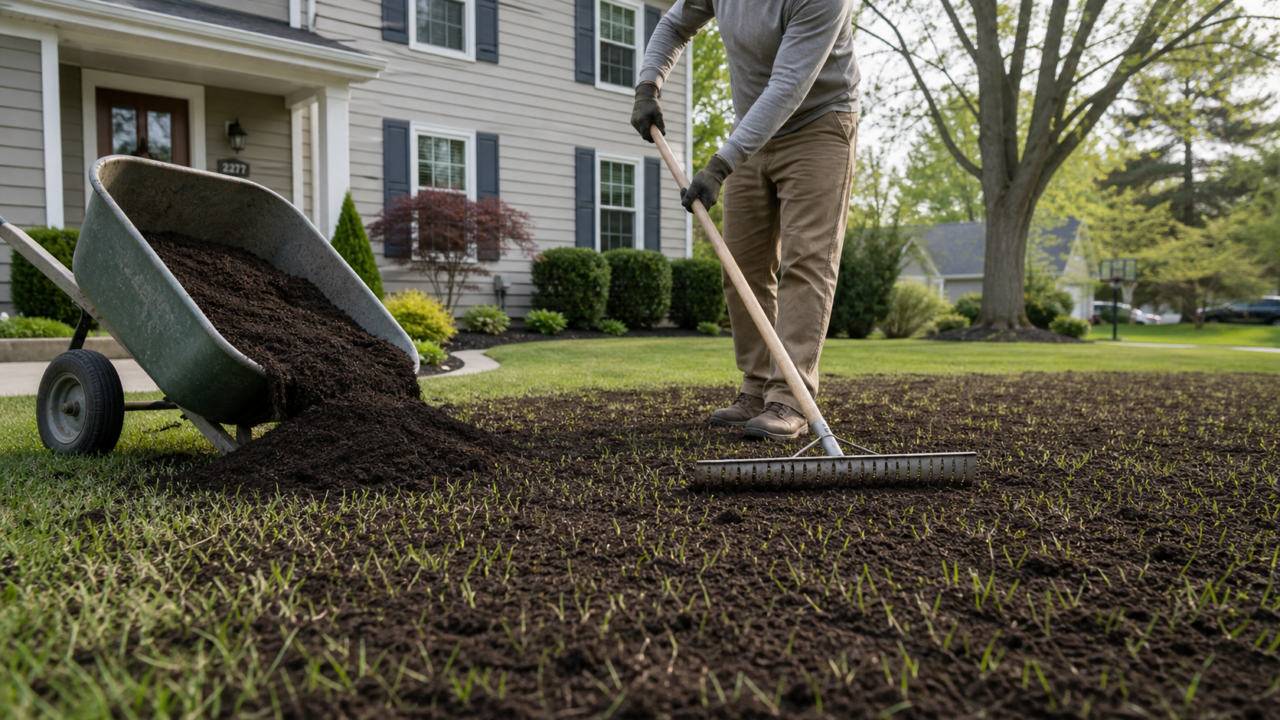
What does it mean to topdress a lawn?
Topdressing a lawn is the process of spreading a thin layer of material—usually compost, screened topsoil, sand, or a blend—over the existing grass. The goal is to improve the soil your lawn is growing in while still letting the grass grow up through the layer.
Instead of just dumping fertilizer on top, topdressing actually changes the soil structure, adds organic matter, and creates better growing conditions right where the roots live. Done correctly, the layer is typically around 1/4–1/2 inch thick so the grass isn’t buried or smothered.
Why homeowners consider topdressing
Most people call about topdressing after they’ve noticed a few things:
-
Grass that looks tired or thin even after regular mowing and fertilizing.
-
Bumps, dips, and rough spots that make mowing annoying and the yard uncomfortable to walk on.
-
Heavy, compacted soil that stays wet in spots, dries out fast in others, and just doesn’t grow great grass.
Topdressing is attractive because it upgrades the soil without tearing up the yard or doing a full re-sod project. It’s a repair and improvement method you can layer into your normal lawn care schedule, especially when you’re already overseeding or aerating.
What topdressing does for your lawn
Improves soil quality and structure
A good topdressing blend adds organic matter and better-textured soil right on top of your existing lawn. Over time, rain, watering, and foot traffic work that material down into the root zone, improving drainage, water holding capacity, and nutrient availability.
For lawns growing on heavy clay (common around here) or poor fill dirt, topdressing loosens things up and gives roots a more workable environment instead of asking them to fight compacted, low-quality soil.
Helps grass fill in thin and bare spots
If you combine topdressing with overseeding, the new layer becomes a better seed bed than your existing soil. Compost-based blends hold moisture and provide nutrients, which helps grass seed germinate and fill in thin areas faster.
For older lawns with patchy areas, this “topdress plus seed” approach is usually more cost-effective than ripping up and re-sodding every problem spot.
Reduces compaction and thatch over time
Topdressing is especially effective when it’s paired with core aeration first. Aeration opens channels in the soil; then the topdressing blend settles into those cores and starts changing the soil matrix from the inside out.
Organic material in the blend also helps break down thatch—a layer of dead stems and roots that can keep water and nutrients from getting into the soil.
Levels minor bumps and low spots
Because you’re literally adding a thin layer of material across the surface, topdressing is ideal for smoothing out small dips, low spots, and minor uneven areas. It’s not a fix for major grading problems, but it does make the lawn more comfortable to walk on and easier to mow cleanly.
When is the right time to topdress?
Topdressing works best when the grass is actively growing so it can push up through the new layer and recover quickly. In our climate, that usually means spring and early fall, with fall often being the preferred window because temperatures and moisture are more consistent for overseeding.
You generally want to avoid topdressing during extreme heat or drought because stressed grass doesn’t handle the disturbance as well. We plan topdressing projects around the weather—similar to how I plan mowing height and schedule to protect lawn health during hot spells.
What materials are used to topdress a lawn?
Most topdressing blends include some combination of:
-
Compost: Adds organic matter, beneficial microbes, and slow-release nutrients.
-
Screened topsoil or loam: Improves the physical structure of the soil and helps level the surface.
-
Sand: Used in smaller amounts to improve drainage and help smooth out minor unevenness.
The mix should be compatible with the soil you already have so you’re improving it rather than creating a completely different layer that fights your native soil. When I look at a yard in Northeast Ohio, I’m usually thinking in terms of heavy clay or compacted fill and adjusting the blend to lighten and enrich that base rather than working against it.
How topdressing is performed step by step
My process blends what the textbooks say with what actually works in real yards with real people living on them. Here’s the basic flow:
1. Assess the lawn and soil
I start by walking the yard with the homeowner, looking for: bare spots, low areas, bumps, compaction, drainage issues, and any weed pressure that might need attention first. If needed, I’ll recommend a soil test so we’re not guessing on pH and nutrient levels.
This walkthrough is also where we decide whether topdressing alone is the right move or whether we should pair it with aeration, overseeding, or other work.
2. Prepare the lawn
Before any material goes down, the lawn needs a bit of prep:
-
Mow the grass a little shorter than usual to make it easier for the material to reach the soil surface.
-
Remove excessive thatch or debris so the layer doesn’t just sit on top of a mat of dead material.
-
Handle major weed issues first so we’re not feeding and protecting a bed of weeds.
If we’re including core aeration, that’s done here to open up the soil and create channels for the topdressing to settle into.
3. Select and stage the topdressing blend
Based on the lawn’s needs and the owner’s goals, I’ll choose a compost-heavy blend for nutrient and organic matter, or a soil/sand/compost mix when leveling and drainage are more important.
Material is brought in and staged in piles around the yard so we’re not pushing wheelbarrows all day from one corner.
4. Spread a thin, even layer
Using shovels, rakes, and specialty spreaders (depending on the job size), we distribute the blend over the lawn in a thin layer—usually around – inch thick. We’re aiming for:
-
Grass blades still visible through the material.
-
No buried or smothered areas.
-
A consistent depth across the yard, slightly heavier in low spots that need leveling.
The backside of a rake, a drag mat, or a leveling tool is used to work the material down between the grass blades and into contact with the soil.
5. Overseed if needed
If the lawn is thin or we’re trying to repair bare spots, overseeding is done immediately after topdressing. The fresh layer gives the seed a better bed and helps hold moisture, which improves germination and early root development.
We’ll pick seed varieties that fit how you actually use the yard—kids, dogs, shade, full sun—so we’re not just tossing “whatever was on sale” into the mix.
6. Watering and short-term care
After the material and any seed are down, the lawn needs consistent moisture:
-
Initial deep watering or timing with a good rain to settle the material and help it blend into the soil.
-
Light, frequent watering if overseeding, to keep the seed layer moist until germination.
We’ll also talk through mowing height and schedule for the next few weeks so we’re not scalping new growth or stressing the grass while it’s adjusting to the new layer.
What results you can expect
Short-term changes
Within days to weeks after topdressing, most homeowners notice:
-
The lawn surface feels more even underfoot, especially in previously bumpy areas.
-
The grass color and density start to improve in thin spots once new seed takes and roots settle into the better soil.
You’ll see the material visually at first, but as watering and growth continue, it blends in and the yard starts to look more uniform.
Long-term benefits
Over months and seasons, the bigger benefits show up:
-
Better root depth and resilience to heat, cold, and foot traffic.
-
Improved drainage and reduced standing water or hard-baked dry patches.
-
Less thatch, healthier soil biology, and grass that responds better to routine fertilizing and mowing.
Topdressing isn’t a one-and-done miracle fix—it’s a strategic upgrade you can repeat every few years or as needed to keep the lawn trending healthier instead of just “fighting symptoms” with quick products.
How topdressing fits into Colin Can Help lawn care
Because I’ve spent years maintaining lawns in Northeast Ohio, I see topdressing as one of the highest-impact services for lawns that have “good bones” but bad soil or rough surfaces. It pairs especially well with the weather-aware mowing, higher summer height, and selective skipping I already use to keep lawns from being scalped or stressed during extreme conditions.
When we add topdressing on top of that approach, you’re not just keeping the grass alive—you’re actively improving the soil it grows in so every cut and every season works a little more in your favor.
Is topdressing right for your yard?
Topdressing is usually a strong fit if:
-
You have thin or tired grass but don’t want a full re-sod.
-
Your yard feels bumpy and uneven, but major grading isn’t necessary.
-
You’re ready to invest in soil health, not just surface-level cosmetic fixes.
If you’re in Northeast Ohio and want to know whether your lawn is a good candidate, I offer on-site evaluations where we walk the property together, talk through how you use the yard, and build a plan that may include topdressing, overseeding, aeration, or a combination of them.