
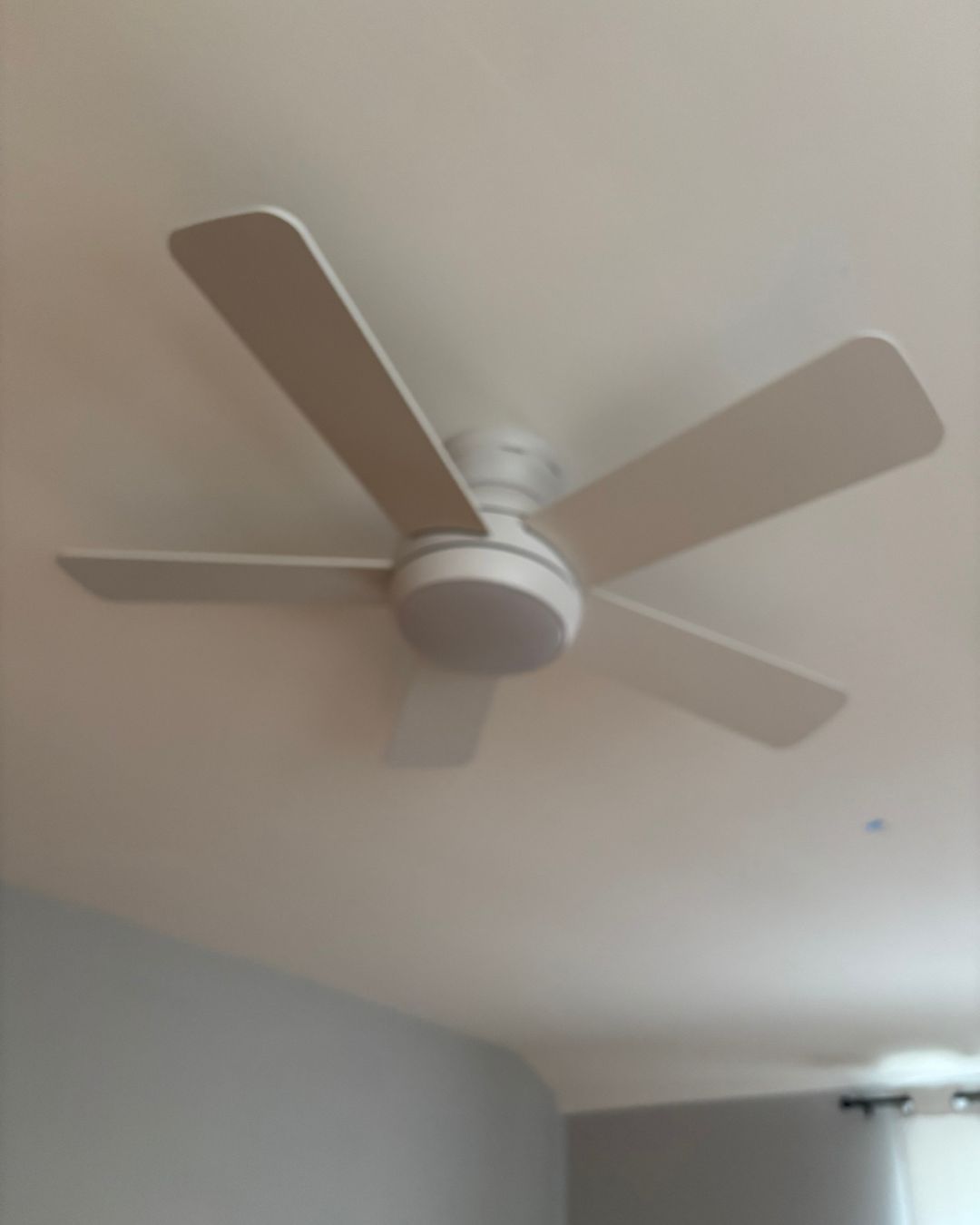
Most ceiling fans work best with 3 to 5 blades. Blade count mostly changes the look and the sound. How much air a fan moves comes down to its motor, blade pitch, size and CFM rating, not the number of blades. Go with 3 blades for a modern look and strong airflow, 4 for an all-around choice, and 5 for a quieter, more traditional fan.
Last updated: November 2026
This box contains affiliate links. As an Amazon Associate I earn from qualifying purchases. See the affiliate note at the bottom of this post.
🧰 What You’ll Need
Fans to compare and the basics for swapping one in safely. These are general recommendations, not specific brands I’m vouching for:
Modern style, strong airflow. A good fit for living rooms and great rooms.
Shop →
A light fixture box isn’t built to hold a fan. Use a box rated for fan support.
Shop →
Rather not DIY it? If you’re in Northeast Ohio, text me a photo of the room and the ceiling box and I’ll tell you what it needs.
It’s easy to assume that more blades mean more airflow — but that’s not actually true.
The number of blades affects look, sound, and efficiency, not how “strong” the fan is. Most modern fans have 3 to 5 blades, and the best choice depends on your room’s size, style, and how quiet you want it to be.
The Quick Answer: 3 to 5 Blades Is the Sweet Spot
Almost all ceiling fans fall into this range for a reason — it’s the perfect balance between performance, stability, and noise control.
-
3 blades → modern, efficient, and powerful airflow
-
4 blades → balanced and traditional, with good airflow and quieter operation
-
5 blades → refined and quiet, best for bedrooms and living rooms where silence matters
More than 5 blades doesn’t add much — it can even reduce efficiency because the air pressure between blades creates drag. In other words, your motor ends up working harder for the same result.
3-Blade Fans: Sleek, Strong, and Efficient
Three-blade fans are popular for modern and minimalist spaces.
They move air quickly and efficiently because there’s less resistance as the blades spin.
You’ll see them most often in open living areas, large rooms, or even garages where performance matters more than silence.
Pros:
Excellent airflow efficiency
Lightweight and energy-saving
Great for high ceilings and large rooms
Considerations:
Slightly louder “whoosh” sound compared to 5-blade models
Usually more modern in style, which might not fit every room’s décor
Best for:
Living rooms, great rooms, or spaces where you want strong air movement.
4-Blade Fans: The Middle Ground
Four-blade fans strike a balance between airflow and quiet operation.
They look traditional and fit well into most home designs, which makes them one of the most versatile options on the market.
Pros:
Quieter than 3-blade models.
Still provide excellent airflow.
Blend easily with any interior style.
Considerations:
Slightly less efficient due to added drag.
May require a bit more motor power to move the same amount of air.
Best for:
Bedrooms, offices, and average-size living rooms where comfort and quiet are both important.
5-Blade Fans: Smooth, Silent, and Stylish
Five-blade fans are the go-to for comfort-focused areas like bedrooms or family rooms.
The extra blades make them quieter because they spread the air more evenly and reduce turbulence.
Pros:
Ultra-quiet operation
Classic, elegant design
Moves air gently and evenly
Considerations:
Slightly higher energy use due to added weight
Airflow can feel softer — not ideal for large, open spaces
Best for:
Bedrooms, living rooms, and home offices where quiet performance matters.
What About 6 or More Blades?
Fans with 6, 7, or even 8 blades usually fall into two categories:
-
Industrial fans for warehouses, restaurants, or outdoor spaces.
-
Decorative statement pieces meant for style, not airflow power.
In most homes, they’re overkill — you’ll pay more for less efficiency.
If you love the look, just make sure the fan has a high-quality DC motor to handle the extra weight smoothly. Here’s how AC and DC fan motors compare.
How to Choose the Right Blade Count for Your Room
| Room Type | Ideal Blade Count | Reason |
|---|---|---|
| Bedroom | 4–5 | Quiet, gentle airflow for sleeping |
| Living Room | 3–4 | Balanced airflow and style |
| Kitchen or Dining Area | 4 | Moderate airflow without drafts |
| Garage / Workshop | 3 | Maximum air movement and performance |
| Porch / Patio | 3–4 | Efficient circulation in open air |
Pro tip: Don’t stress over blade count alone — look at the fan’s CFM rating (airflow) and motor quality. A well-built 3-blade fan can outperform a cheap 5-blade fan any day. Fan diameter matters too: see what size ceiling fan you need for your room.
Ceiling Fan Safety Before You Swap One In
- Kill the power at the breaker, not just the wall switch, and confirm it’s off with a voltage tester.
- Use a fan-rated box. Fans are heavy and they move. A standard light fixture box can work loose over time.
- Mind the height. Blades should sit at least 7 feet above the floor. More in proper height for a ceiling fan.
- Call a licensed electrician if there’s no box or wiring where you want the fan, the wiring looks old or damaged, or you need a new circuit or switch.
Ceiling Fan Blade FAQ
Do more blades move more air?
Not by themselves. Motor power, blade pitch, fan size and the CFM rating matter more than blade count.
Are 5-blade fans quieter?
They often feel smoother and quieter, which is why they’re popular in bedrooms. A well-balanced fan with a good motor matters most for noise.
Why is my ceiling fan wobbling?
Usually loose blade screws, a warped blade or a loose mounting bracket. Tighten everything first, then try a balancing kit.
Which way should my fan spin in summer?
Counterclockwise in summer for a cooling breeze. See which direction your ceiling fan should go.
Related Guides
- What Size Ceiling Fan Do I Need for My Room?
- Ceiling Fan Lighting Options Explained
- Do You Need a Smart Fan?
- Proper Height for a Ceiling Fan
Final Thoughts
There’s no “one-size-fits-all” answer, but here’s the rule of thumb:
-
Go with 3 blades for performance.
-
Choose 4 blades for versatility.
-
Pick 5 blades for quiet comfort.
As long as your fan is properly installed, balanced, and sized for the room, it’ll do its job beautifully — no matter how many blades it spins.
Need help installing or upgrading your ceiling fan?
Colin Can Help provides expert ceiling fan installation, replacement, and troubleshooting across Northeast Ohio — safely, cleanly, and always balanced to perfection.
📱 Text Colin a Photo See ceiling fan installation →

Scan to join our Loyalty Program, get a free coupon for your next service, and stay up to date on our services and articles.
Affiliate Note
Some of the links in this article are affiliate links. That simply means if you choose to buy through them, I may earn a small commission at no extra cost to you. As an Amazon Associate I earn from qualifying purchases. I only recommend products I trust and would feel comfortable installing in my own home or a client’s home.
If you try something I recommended and it turns out to be anything less than a five-star experience, please let me know. I always want these recommendations to be genuinely helpful.