
Short Answer
Right after a cleanout, before anything goes back in, sweep the floor, decide where the car (or cars) will sit, and split the rest of the garage into a few zones: the stuff you grab every week by the door, seasonal gear further back, and long-term storage up high. Get everything off the floor with wall-anchored shelving, wall hooks and maybe a ceiling rack, put things in labeled bins, and keep gas, propane and chemicals stored safely. Then swap summer and winter gear twice a year so the stuff you need is always in front.
This box contains affiliate links. As an Amazon Associate I earn from qualifying purchases. See the affiliate note at the bottom of this post.
🧰 What I Use
When I put up garage shelves and hooks, these do most of the work:
- My stud finder, because shelving and hooks need to go into studs, not just drywall
- My 2-foot level, for shelf brackets and wall rails
- My drill bit set, for clean pilot holes for lag screws
- The best work gloves, for a garage that’s been sitting full for years
🛒 Helpful Picks
These are well-reviewed options, not my personal picks.
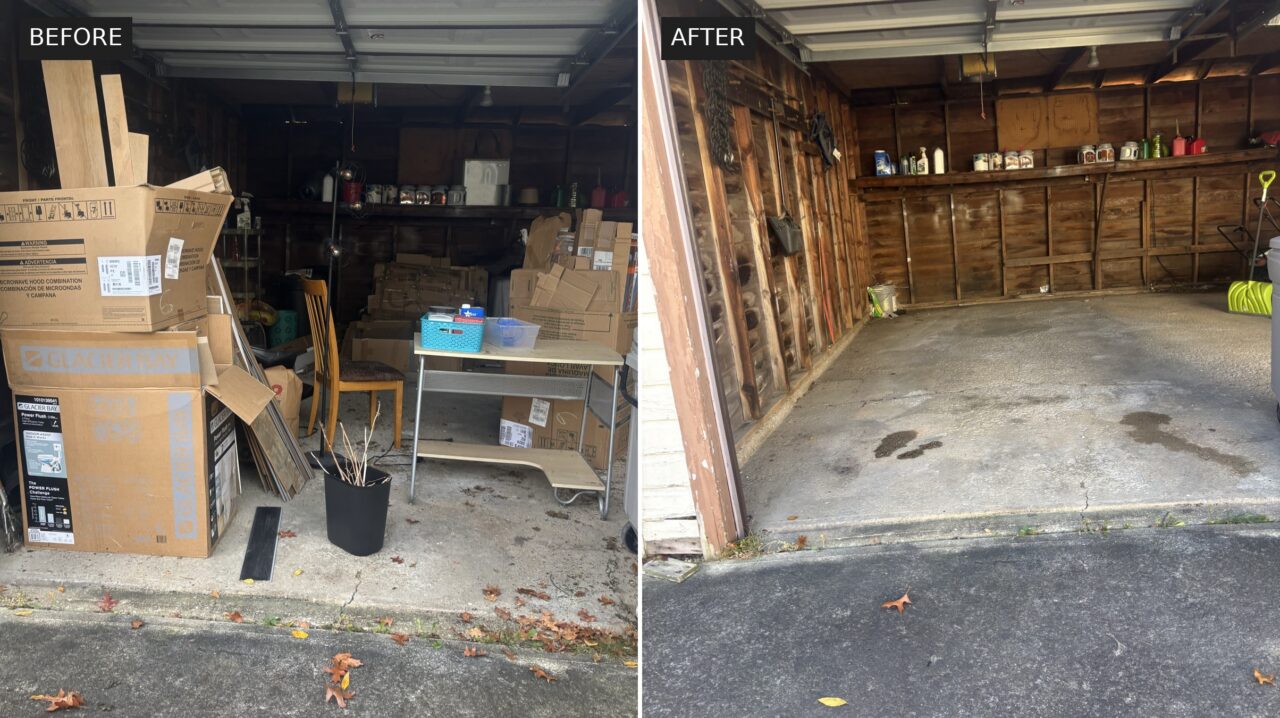
A cleaned-out garage is the best chance you’ll get to set it up right. Once the junk is gone, it’s tempting to just push everything that’s left back against the walls. Give it one more afternoon instead. A little planning now is the difference between a garage that stays usable and one that’s full again by next fall.
If you haven’t done the cleanout yet, here’s what a garage cleanout costs, with a real Cleveland Heights example. This post picks up once the space is empty.
Step 1: Start With an Empty, Clean Floor
Before anything goes back in, sweep it out and take a look at what you’ve got. With the garage empty you can actually see the walls, the outlets, where the garage door tracks run and where water comes in when the snow melts off your car. Check for:
- Damp spots or stains along the walls. Don’t put cardboard boxes or anything that can rust there.
- Where the car doors swing open. That space needs to stay clear.
- Where the garage door, its tracks and the opener sit. Nothing should hang where the door travels.
- Outlets you’ll want to reach, like for a battery charger or shop vac.
Step 2: Decide What Goes Back In
Everything still left after the cleanout should earn its spot. Ask three questions about each thing: Do I use it? Does it need to live in the garage? Do I have a place for it? Anything that fails gets donated, sold or hauled. Paint, chemicals and electronics shouldn’t go in the regular trash, so set them aside and check your city’s service department page for how to get rid of them.
Step 3: Set Up Zones
This is the part that keeps it organized. Group things by how often you use them, not just by what they are.
- Grab-and-go zone (closest to the house door): shovels and ice melt in winter, the dog leash, reusable shopping bags, recycling bins, a small set of everyday tools.
- Lawn and garden zone (closest to the big door): mower, string trimmer, blower, rakes, hoses, bags of mulch. Heavy stuff that rolls out should have a straight path to the door.
- Tools and projects: one wall or one shelving unit for tools, hardware, paint and supplies, ideally with a spot to work.
- Sports and kids’ stuff: bikes on wall hooks, balls in a bin or bag. Keep it low enough that kids can put it away themselves.
- Long-term storage (up high): holiday decorations, camping gear, keepsakes you don’t touch every month.
Step 4: Get Everything Off the Floor
The floor is where garages fall apart. If it’s on the floor, other stuff gets piled on top of it. Use the walls and, if you have room, the ceiling.
Shelving
Freestanding steel shelving is the easiest place to start. Anchor tall units to the wall studs, the same way you’d anchor a dresser or bookcase. Loaded shelves are heavy and garage floors usually slope toward the door, so a unit that isn’t anchored can lean or tip. Put heavy things on the bottom shelves and lighter bins up top.
Wall hooks and rails
Wall track systems or heavy-duty hooks are great for ladders, rakes, shovels, extension cords, hoses and bikes. Screw the rail into studs. A ladder or bike hanging off drywall anchors won’t stay up long.
Ceiling racks
Overhead racks are good for long-term bins. This Old House’s overhead storage guide stresses finding the ceiling joists and fastening into them, because a rack that isn’t in a joist can pull out. Follow the rack’s weight rating, keep it clear of the garage door and opener, and don’t store anything up there you’ll need every week.
Step 5: Bin It and Label It
- Use clear bins with lids so you can see what’s inside. Lids keep out dust and mice.
- Label the short end of each bin, the side you see when it’s on the shelf.
- Skip cardboard boxes for long-term storage. Garages around here get damp, and cardboard soaks it up.
- Keep like with like: one bin for plumbing parts, one for painting supplies, one for holiday lights.
Step 6: Store the Risky Stuff Safely
- Gasoline: keep it in an approved gas can, tightly closed and upright, away from heat, sparks and pilot lights, like a gas water heater or furnace. Massachusetts’ fire safety office recommends a locked shed or detached garage, away from living areas. Only keep what you need for the mower or snowblower.
- Propane tanks: the CPSC’s gas grill safety sheet says never to use or store a propane cylinder indoors, and to keep it upright. To be safe, leave the grill tank outside rather than in an attached garage.
- Chemicals: pesticides, pool chemicals, cleaners and automotive fluids go on a high shelf or in a cabinet, out of kids’ and pets’ reach, in their original containers.
- Things that don’t like freezing: latex paint, some liquid fertilizers and water-based products can be ruined if they freeze in an unheated garage. Move them to the basement for winter.
Step 7: Rotate Seasonally
In Northeast Ohio the garage basically changes jobs twice a year. Set a reminder for late fall and early spring.
- Late fall: mower, trimmer and hoses move to the back. Shovels, ice melt and the snowblower move to the front. Before the lawn stuff goes away, here’s how to get lawn equipment ready for winter storage and how to store garden tools for winter.
- Early spring: flip it back. It’s also a good time for a quick 20-minute purge of anything that crept in over the winter.
Road salt and slush come in on the car all winter, so sweep or squeegee it out now and then and keep metal tools and bins off the wettest part of the floor.
Time and Difficulty
- Time: sorting and zoning a one- or two-car garage often takes a full day. Putting up shelving, rails and hooks is usually another few hours, more if you’re adding a ceiling rack.
- Difficulty: easy for sorting and bins. Moderate for anything that mounts to the wall or ceiling, since it has to go into studs or joists.
Common Mistakes
- Buying storage before you know what’s staying. Sort first, then buy.
- Putting heavy shelves or hooks into drywall without hitting studs.
- Hanging storage where the garage door or car doors need to go.
- Using cardboard boxes in a damp garage.
- Putting the stuff you use every week in the back corner.
- Storing propane tanks or extra gas cans next to the water heater or furnace.
DIY or Call a Guy?
DIY it if it’s mostly sorting, bins and a couple of freestanding shelving units. That’s a good weekend project and you’ll know where everything is when you’re done.
Call someone if there’s still a lot of junk to haul out, if you want shelves, rails and racks mounted into studs and joists, or if you just don’t have a free weekend. One trip to haul the junk and put up the storage gets it done at once. For other small jobs you’ve been putting off, here’s how my Handyman Time Blocks work.
Local to Euclid or Cleveland’s east side? I haul out garage junk and put up shelves and garage storage racks myself. See my Junk Removal in Euclid & Cleveland page, or text me a photo at 216-800-5883.
FAQ
What’s the first thing to do after a garage cleanout?
Sweep it out while it’s empty, then decide where the car goes and set up your zones before anything goes back in.
Should garage shelving be anchored to the wall?
Yes for tall units. Loaded shelves are heavy and garage floors usually slope, so anchor them into studs.
What shouldn’t be stored in a garage?
Propane tanks shouldn’t be stored indoors, so to be safe keep them outside, not in an attached garage. Keep gas to a small amount in an approved can away from flames and pilot lights. Move paint and anything that can be ruined by freezing inside for winter, and keep chemicals out of kids’ reach.
Are ceiling storage racks safe?
They can be, if they’re fastened into ceiling joists, loaded within the rack’s weight rating and kept clear of the garage door and opener. Use them for light, long-term bins.
How do I keep the garage from filling up again?
Give everything a zone, keep the floor clear, and do a quick purge every time you swap summer and winter gear.

Scan to join our Loyalty Program, get a free coupon for your next service, and stay up to date on our services and articles.
Affiliate Note
Some of the links in this article are affiliate links. That simply means if you choose to buy through them, I may earn a small commission at no extra cost to you. As an Amazon Associate I earn from qualifying purchases. I only recommend products I trust and would feel comfortable installing in my own home or a client’s home.
If you try something I recommended and it turns out to be anything less than a five-star experience, please let me know. I always want these recommendations to be genuinely helpful.