
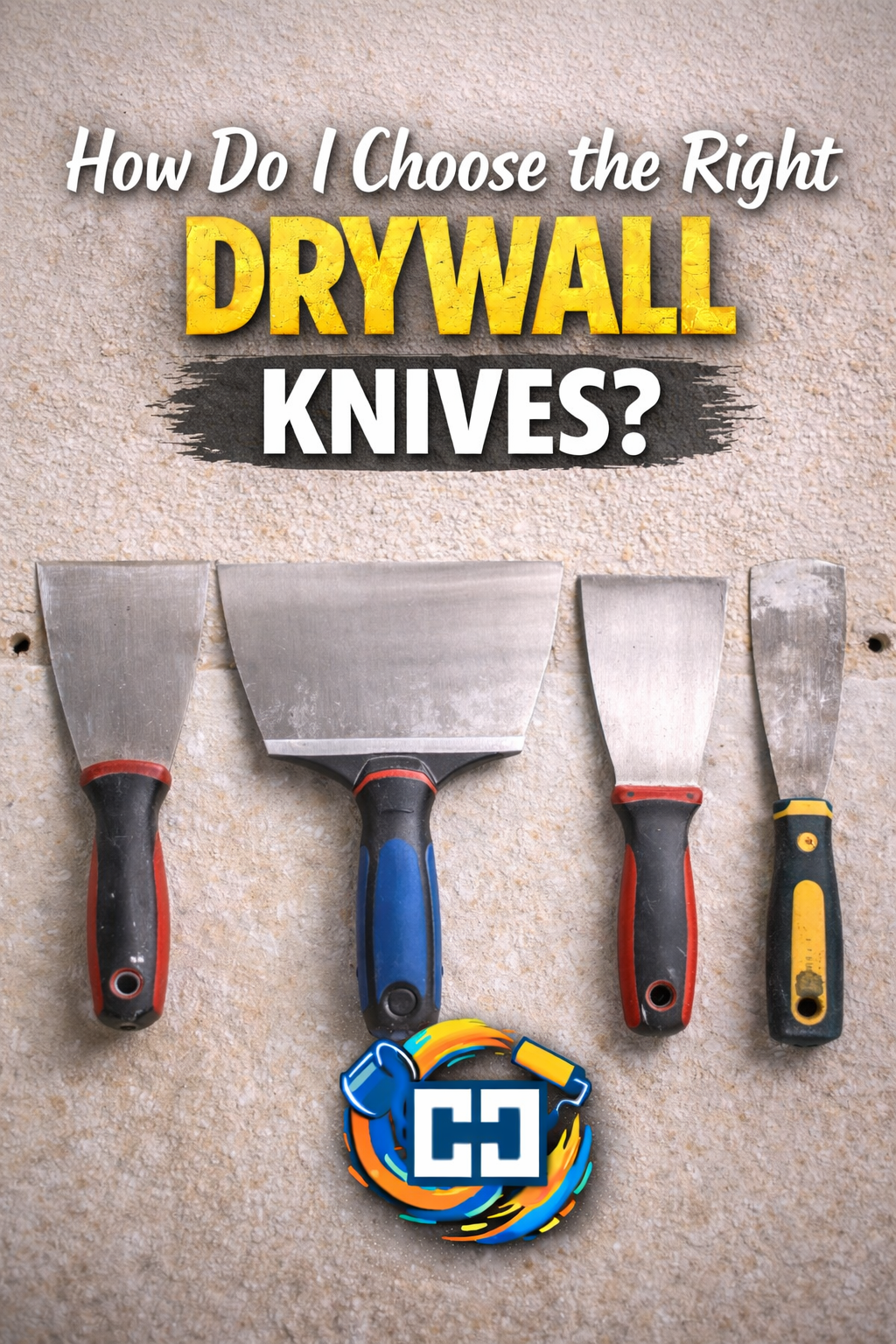
Short Answer: What Drywall Knives Do I Actually Need?
If you are a homeowner doing repairs or finishing a room, you need:
-
A 6-inch taping knife
-
A 10-inch taping knife
-
A mud pan
That setup handles 90 percent of drywall jobs.
If you are doing a full house or heavy finishing work, you may add:
-
A 12-inch knife
-
A corner trowel
That is it.
You do not need six different knives to get clean seams.
The right drywall taping knife for each stage comes down to size and flex. Understanding drywall knife sizes is the biggest thing most beginners get wrong. If you are looking for the best drywall knives for beginners, start with that 6 and 10 combo and get comfortable before adding anything else.
Now let me explain how to choose them correctly.
What I Carry on My Truck
For most drywall jobs around Cleveland, I carry:
-
1-inch knife
-
4-inch knife
-
6-inch knife
-
10-inch knife
-
12-inch knife
-
Inside corner trowel
-
Stainless steel mud pan
The 6 and 10 do most of the work.
The 12-inch comes out for wider feathering on long seams or ceiling work.
If you are still building your tool setup, see the full drywall tools list here.
Now let’s break down what each knife actually does.
Why Knife Size Matters
Drywall finishing is about feathering.
You are not just filling a seam.
You are spreading mud wider and wider so the joint disappears under paint.
Small knife for tight work.
Bigger knife for flattening and blending.
If you try to finish everything with a 6-inch knife, your seams will look like speed bumps.
The 6-Inch Knife: Your Base Tool
This is the first knife you buy.
What It Does
-
Embed tape
-
Fill screw holes
-
Apply first coat on seams
-
Handle small patches
Shop 6-inch drywall taping knives at Lowe’s
What to Look For
-
Flexible blade
-
Comfortable handle
-
Stainless steel if possible
-
Straight edge with no warping
You want some flex, but not floppy.
If it feels like a putty knife for wood filler, it is probably too stiff.
Why I Use It
The 6-inch gives control.
When I am bedding tape, I want pressure and precision. This size lets me push mud into the seam without making a mess.
The 10-Inch Knife: The Workhorse
This is where seams start disappearing.
What It Does
-
Second coat on joints
-
Feathering wider seams
-
Blending patches
-
Ceiling seams
Shop 10-inch drywall taping knives at Lowe’s
What to Look For
-
Slight flex across the blade
-
Balanced feel in your hand
-
Clean, straight edge
This knife should feel smooth when you pull it across a flat surface.
If it leaves lines in fresh mud, the blade may be warped.
Why I Use It
After tape is embedded, I switch to the 10-inch for widening the joint.
This is where you flatten everything out. The wider blade spreads pressure evenly.
Most homeowners can stop at this size and get good results.
The 12-Inch Knife: When You Want It Invisible
You do not need this for small repairs.
But if you are finishing long seams or doing ceiling work, it helps.
What It Does
-
Final coats
-
Wide feathering
-
Blending large repairs
Shop 12-inch drywall taping knives at Lowe’s
What to Look For
-
Light but sturdy
-
Good flex without chatter
-
Comfortable grip
Why I Use It
On larger jobs, the 12-inch helps make seams disappear under flat paint.
The wider the blade, the smoother the blend.
But if you are just patching a hole, this is not required.
Do I Need a Corner Trowel?
For inside corners, a corner trowel can help.
What It Does
-
Shapes inside corners evenly
-
Keeps both sides consistent
Shop drywall inside corner trowels at Lowe’s
What to Look For
-
True 90-degree angle
-
Stainless steel
-
Smooth edges
Why I Use It
On long corner runs, it speeds things up.
But you can also use a 6-inch knife carefully if you are patient.
Beginners often overwork corners. Less pressure is better.
Stainless vs Carbon Steel Knives
This matters more than people think.
Stainless steel:
-
Resists rust
-
Easier maintenance
-
Cleaner over time
Carbon steel:
-
Often cheaper
-
Can rust if not cleaned well
If you are a homeowner doing occasional work, stainless is worth it. It lasts longer and stays smooth.
Flexible vs Stiff Blades
Flexibility affects finish quality.
More flexible blades:
-
Better for final coats
-
Smoother feathering
Stiffer blades:
-
Better for scraping
-
Better for initial pressure
Most standard taping knives strike a balance.
If it barely bends at all, it is probably too stiff for finishing work.
Common Drywall Knife Mistakes
Buying only one size
You will struggle to feather seams.
Going too wide too soon
Control matters before width.
Not cleaning knives immediately
Dried mud creates lines in your next pass.
Over-applying pressure
Let the blade glide. Do not dig into the wall.
If you are new to mudding entirely, read this first:
Spackle vs Joint Compound: What’s the Difference?
Do Expensive Knives Make a Difference?
For most homeowners, mid-range stainless knives are perfect.
You do not need high-end professional brands unless you are finishing drywall every week.
What matters most:
-
Straight blade
-
Clean edge
-
Comfortable handle
-
Proper size for the stage you are in
Skill beats brand.
Final Advice
If you are standing in the aisle wondering how to choose drywall knives, keep it simple.
Buy:
6-inch
10-inch
Mud pan
Add a 12-inch later if you are finishing full rooms.
That setup handles almost every DIY drywall project.
And if you are in Northeast Ohio and decide you would rather skip the mudding process altogether, Colin Can Help handles drywall repair and finishing professionally.
Affiliate Note:
Some links in this article may be affiliate links. If you buy through them, I may earn a small commission at no extra cost to you. I only recommend products I use or trust. If you try one and it’s anything less than a five-star experience, please let me know.

Scan to join our Loyalty Program, get a free coupon for your next service, and stay up to date on our services and articles.
Affiliate Note
Some of the links in this article may be affiliate links. That simply means if you choose to buy through them, I may earn a small commission at no extra cost to you. I only recommend products I trust and would feel comfortable installing in my own home or a client’s home.
If you try something I recommended and it turns out to be anything less than a five-star experience, please let me know. I always want these recommendations to be genuinely helpful.