Carbon monoxide (CO) is often called the “silent killer” for a reason. It is colorless, odorless, invisible, and impossible to detect without a device. CO is produced when fuel does not burn completely. That includes gas furnaces, water heaters, fireplaces, gas stoves, generators, and vehicles running in attached garages. Exposure can cause headaches, dizziness, nausea,...

The most overlooked smoke detector location in homes is the hallway directly outside bedrooms. Most homeowners have at least one detector somewhere upstairs, but skipping the bedroom hallway creates a dangerous coverage gap—right where your family sleeps. This guide explains why hallway placement matters, how to do it correctly, what type of detector to choose,...

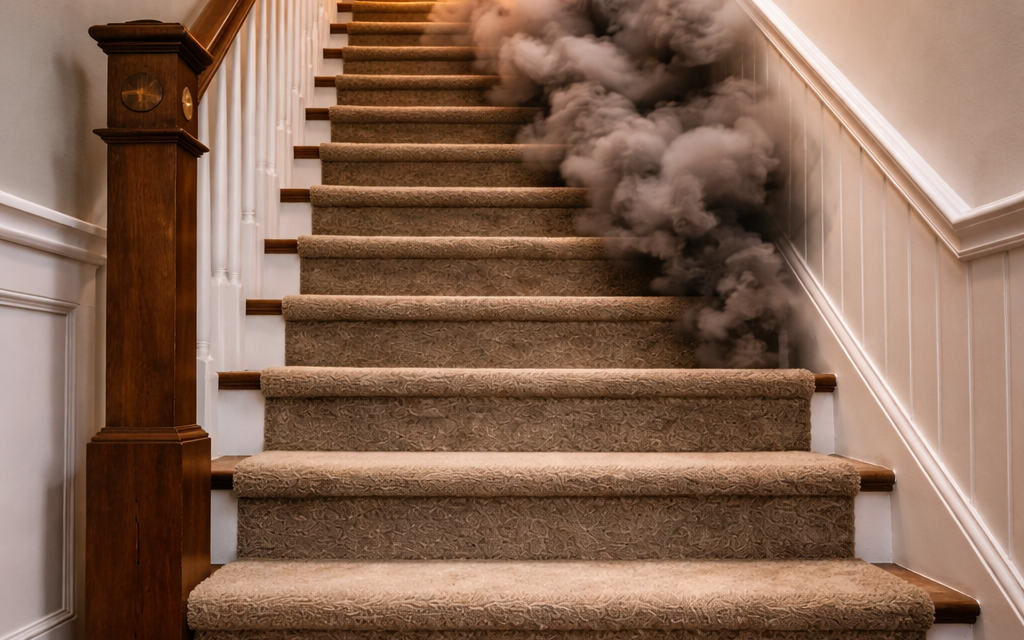
How Stairways Become Smoke Highways in a Fire (And Where Your Smoke Alarms Really Belong)

🔑 Key Takeaway Stairways act like vertical chimneys during a fire, pulling hot, toxic smoke from lower levels and dumping it into hallways and bedrooms in minutes. That is why code bodies and safety organizations recommend at least one smoke alarm on every level, near stairways, and outside sleeping areas—not just in the room where...

Living areas are where many house fires actually start, even if they aren’t where people sleep. Smoke detectors in living rooms, family rooms, and shared spaces provide the earliest possible warning, buying critical time before smoke spreads into bedrooms or stairways. Proper placement in these areas helps detect fires sooner, reduce property damage, and protect...

Most deadly house fires start where you’re not looking — in the basement. A Cleveland Heights family learned this the hard way when their basement furnace malfunction filled their home with smoke while they slept. They survived only because a smoke detector in the basement gave them a 3-minute head start to escape. Basement smoke...

Carbon monoxide detectors save lives only when they’re placed where people will actually be exposed while sleeping or living, not just wherever there’s an outlet or extra wall space. CO is invisible, odorless, and often produced by everyday appliances that appear to be working normally. The most effective protection comes from understanding how carbon monoxide...

Colin Can Help LLC, 2026 © All Rights Reserved