
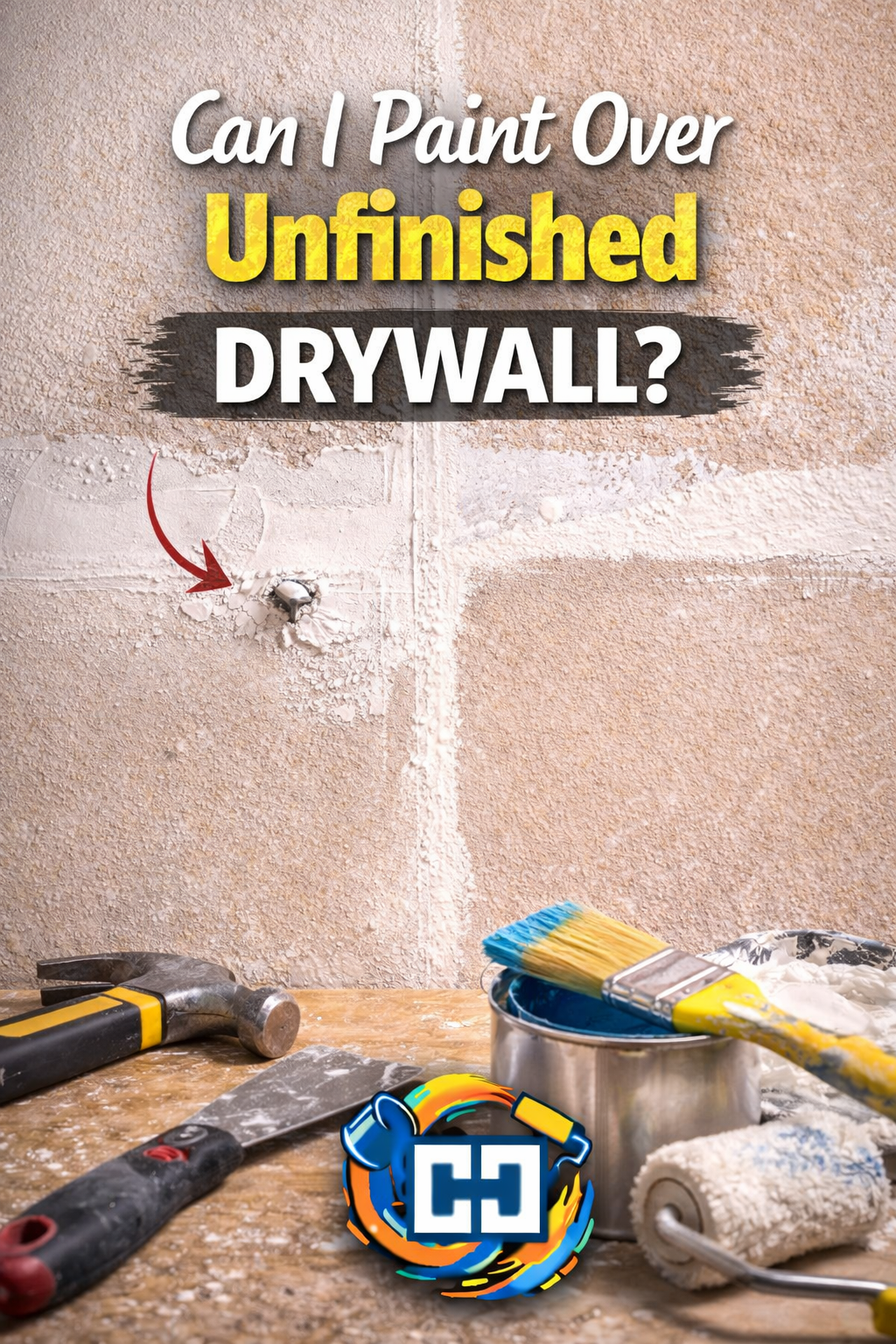
Short answer: you can, but you shouldn’t if you want it to look good. Bare drywall paper and joint compound soak up paint at different rates, so painting straight over them gives you dull and shiny patches, seams that show, and a rough finish. Finish the mud, sand it smooth, wipe off the dust, prime the whole surface, then paint.
Last updated: November 2026
This box contains affiliate links. As an Amazon Associate I earn from qualifying purchases. See the affiliate note at the bottom of this post.
🧰 What I Use
Finish the drywall first, then prime and paint. Here’s what I use for both:
My everyday mud. Premixed and forgiving if you’re new to drywall.
Check price →
All-stainless, so they don’t rust, and the edges stay true.
Check price →
What I keep on the truck. Match the nap to the surface: shorter for smooth walls, doors and trim, thicker for textured walls.
Check price →
Rather not DIY it? If you’re in Northeast Ohio, text me a photo of the wall and I’ll tell you what it needs.
What Counts as “Unfinished” Drywall?
Unfinished drywall usually means one of three things:
- Bare drywall panels with no mud on them
- Taped seams with only the first coat of mud, or none of the final coats
- Sanded patches that haven’t been primed yet
Each one needs prep before paint. Skip the finishing stage and the wall will look patchy and uneven as soon as light hits it from the side.
What Happens If You Paint Bare Drywall?
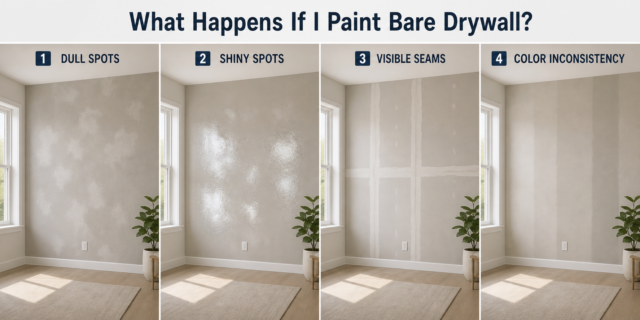
The paper face of drywall and the joint compound over the seams and screws absorb paint differently. Paint alone doesn’t even that out. You’ll see:
- Dull spots and shiny spots
- Seams and screw heads that show through
- Color that looks slightly different from one area to the next
Primer is what makes the whole surface absorb the same way, so the paint on top looks like one even coat.
If your seams are already showing through paint, read Why Are My Drywall Seams Showing Through Paint?
Painting Over Joint Compound Without Primer: Flashing
Joint compound is porous, so paint soaks into it harder than it soaks into the surrounding wall. The result is called flashing: patched areas look duller or shinier than the rest of the wall even though they’re the same color. A coat of primer seals the mud so the finish paint sits evenly across the whole wall.
Do You Need to Finish All the Coats Before Painting?
Yes. Most drywall seams take three coats of mud:
- A first coat to embed the tape
- A second coat to widen it
- A third coat to feather the edges out so the seam disappears
Then sand, then prime. Painting before the final feathering and sanding pretty much guarantees you’ll see the seams.
For the mudding coats, I use premixed all-purpose compound like Sheetrock green-lid all-purpose joint compound for all three coats. If you’re not sure which mud to use for what, read Spackle vs Joint Compound: Which One Should You Use? Each coat has to be fully dry before the next one, which can take longer than you’d think in a cold or damp room: see How Long Does Drywall Mud Take to Dry?
Can You Paint Over Taped Seams Only?
Technically yes, but it will look unfinished. You’ll see ridges and the outline of the tape. Paint highlights imperfections; it doesn’t hide them. The tape needs to be fully covered and feathered first.
Does New Drywall Always Need Primer?
Yes, even when the surface looks uniform. Primer:
- Seals the porous paper and mud
- Helps the paint stick
- Prevents flashing
- Gives you an even sheen
Skipping primer on new drywall is one of the most common DIY mistakes I see.
What Kind of Primer Should You Use?
For new drywall, use a PVA drywall primer or another primer labeled for new drywall. PVA primer is made to seal raw gypsum and joint compound. You can find options like Zinsser PVA drywall primer on Amazon or at any paint store.
Don’t use regular wall paint as a primer, and don’t count on “paint and primer in one” over raw drywall. Those products are designed for previously painted walls. Once the primer is dry, roll on your finish coats.
The Right Order Before You Paint
- Finish all mud coats and let them dry completely
- Sand smooth
- Clean off the dust (vacuum, then wipe with a barely damp cloth)
- Prime the entire surface
- Paint
On big walls and ceilings, a drywall pole sander makes the sanding step faster and more even. For grits and how to keep the dust down, read What’s the Right Grit Sandpaper for Drywall Repairs? and What Is the Best Way to Sand Drywall?
Why Does New Drywall Look Blotchy After Painting?
It almost always traces back to prep:
- No primer, or only spot-primed patches
- Uneven sanding or edges that weren’t feathered wide enough
- Dust left on the wall
- Painting before the mud was fully dry
- Different paint sheens over the patches
Light flashing can usually be fixed by priming the whole wall with a sealing primer and repainting it corner to corner. Spot repainting rarely blends. My guide to matching paint after a wall repair covers the sheen side of it.
Can You Get Away With It in a Garage or Basement?
You can. Some homeowners skip full finishing in utility spaces, and that’s a cosmetic choice. Just know that bare drywall stains easily, takes on moisture more readily and is hard to clean. At minimum, prime it to seal it.
DIY or Call a Guy?
Priming and painting new drywall is a very doable DIY job. The mudding and sanding is where most people struggle: it’s slow, messy, and the difference between “okay” and “invisible seams” is practice. If you have a small patch or a closet, go for it. If it’s a whole room, a ceiling, or seams that keep showing through no matter what you do, it’s worth having someone finish it. For the full painting process start to finish, see my complete guide to interior painting.
Local to Euclid or Cleveland’s east side? I finish, prime and paint drywall myself. See my painting services in Euclid & Cleveland page, or text me a photo at 216-800-5883.
FAQ
Can I paint drywall without primer?
Not if you want an even finish. Paint alone won’t seal new drywall or joint compound, so you’ll get flashing and uneven sheen.
Can I paint drywall after just one coat of mud?
You shouldn’t. The first coat only embeds the tape. It isn’t wide or smooth enough to hide the seam, so you’ll see lines when light hits the wall at an angle.
Can I spot prime instead of priming the whole wall?
For a few small patches on a wall that’s already painted, yes. For new drywall, no: prime the entire surface or the primed and unprimed areas can still show different sheens.
How long after sanding can I prime?
As soon as the dust is cleaned off, as long as the mud is fully dry all the way through. If it’s still damp inside, primer and paint can trap the moisture and cause bubbling or flashing later.
Is paint and primer in one good enough for new drywall?
No. It’s designed for walls that have already been painted. Raw drywall needs a dedicated drywall (PVA) primer first.

Scan to join our Loyalty Program, get a free coupon for your next service, and stay up to date on our services and articles.
Affiliate Note
Some of the links in this article are affiliate links. That simply means if you choose to buy through them, I may earn a small commission at no extra cost to you. As an Amazon Associate I earn from qualifying purchases. I only recommend products I trust and would feel comfortable installing in my own home or a client’s home.
If you try something I recommended and it turns out to be anything less than a five-star experience, please let me know. I always want these recommendations to be genuinely helpful.