
Short Answer: What Type of Joint Compound Do I Need?
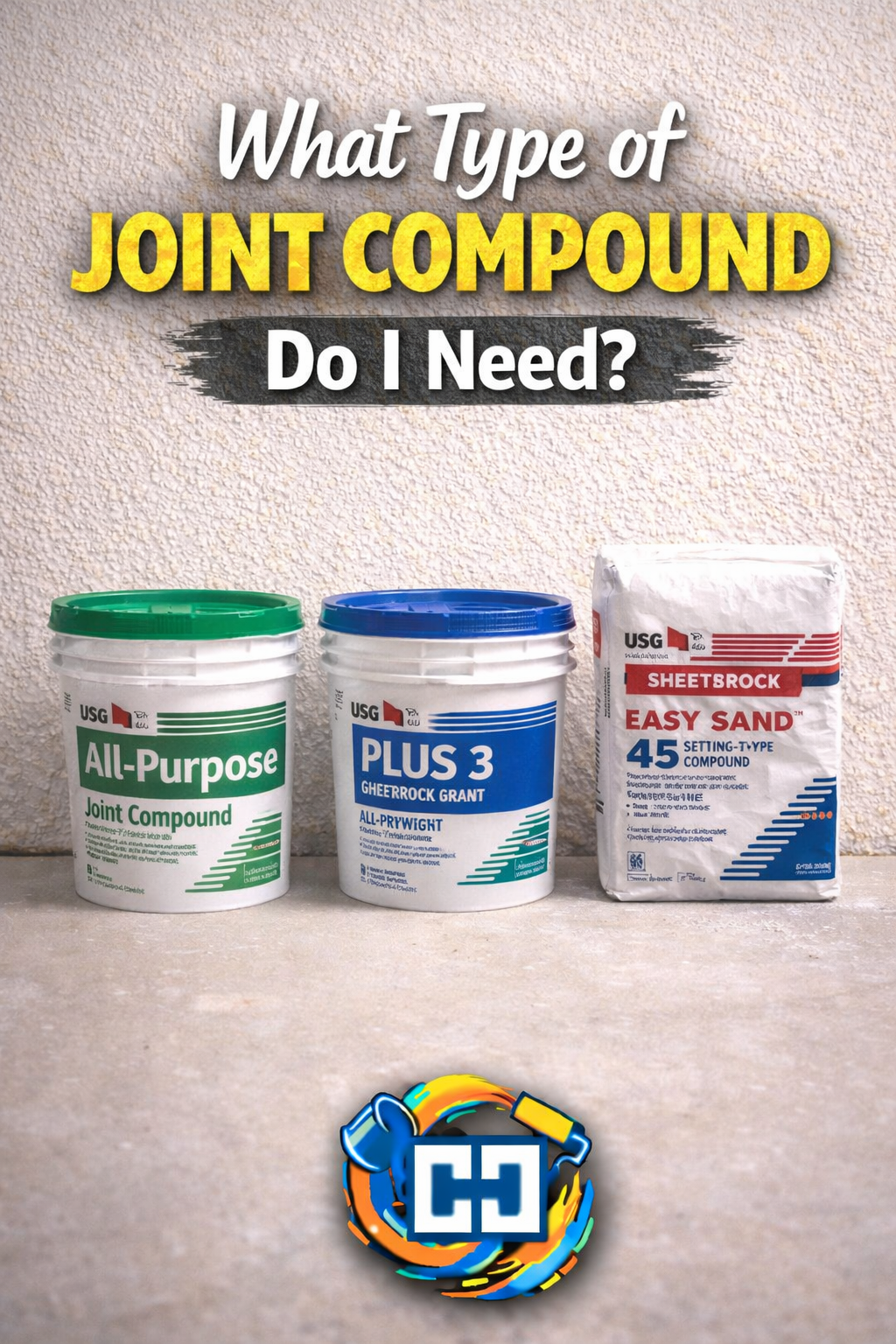
If you are standing in the drywall aisle wondering what type of joint compound you need, you are not alone. The real decision usually comes down to all purpose joint compound vs setting compound, and knowing when to use each one. The best joint compound for drywall repair depends on what you are fixing, how deep the damage is, and how fast you need it done. Products like Easy Sand 45 setting compound behave very differently than premixed bucket mud. Here is a simple breakdown so you can choose the right one without overthinking it.
What Type of Joint Compound Do I Need for Taping New Drywall?
- Use All Purpose for the first coat.
- Finish with Plus 3.
Best Compound for Small Patches
- All Purpose works fine. Finish with Plus 3 if you want it cleaner.
Right Compound for Large Holes or Deep Repairs
- Start with Easy Sand.
- Finish with Plus 3.
If you are in a hurry
- Use Easy Sand.
If you are brand new and only buying one bucket
- Buy All Purpose.
What I Keep on My Truck
On most jobs in Cleveland, I carry:
That combination handles almost everything I run into.
Water damage ceilings. Plaster transitions. Door knob holes. Full basement seams.
Each one has a job. If you use them correctly, the work goes smoother and sanding is easier.
If you are still building your full drywall setup, see my complete drywall tools list at Lowe’s:
Colin Can Help Essential Drywall Tools List
Now let’s break down what each one actually does.
Why Joint Compound Choice Matters
A lot of people think mud is mud… It is not.
Using the wrong compound leads to:
-
Cracks
-
Excess shrinkage
-
Long dry times
-
Hard sanding
-
Frustration
Drywall finishing happens in stages. Bedding tape. Building thickness. Feathering seams. Final smoothing.
Different compounds perform better at different stages.
What Is All Purpose Joint Compound?
All Purpose is the standard premixed bucket mud.
You open it and start working.
What It Does
-
Embeds tape
-
Fills screw holes
-
Covers seams
-
Handles small repairs
It has strong bonding ability. That is why it works well for bedding tape.
Get a Bucket of All Purpose Joint Compound at Lowe’s
Why I Use It
When I am taping new drywall, this is usually my first coat.
It grips tape well. It sticks to seams. It is dependable.
If I could only buy one compound, this would be it.
What to Watch For When Buying
-
Make sure it is premixed
-
Check the lid seal is intact
-
Avoid buckets that feel frozen or separated
Downsides
-
Heavier than lightweight mud
-
Shrinks more
-
Harder to sand than Plus 3
I rarely use it for final finish coats.
What Is Plus 3 Joint Compound?
Plus 3 is a lightweight finishing compound.
It spreads smoother and sands easier.
What It Does
-
Second coats
-
Final coats
-
Skim coats
-
Feathering seams
Why I Use It
If I want a seam to disappear under paint, I switch to Plus 3 for the last coat.
It feathers cleaner. It sands faster. It saves time.
When I am finishing a visible ceiling repair, this is what I want for that last pass.
What to Watch For When Buying
-
Make sure it is labeled lightweight
-
Stir it before using
-
Keep the lid sealed tight so it does not dry out
Downsides
-
Not ideal for embedding tape
-
Not great for deep fills
-
Still air dries so humidity slows it down
I treat this as a finish mud, not a structural mud.
What Is Easy Sand Setting Compound?
Easy Sand is completely different from premixed bucket mud. Setting compound, often called “hot mud,” also shrinks less than air dry mud. That makes it better for deep fills, wide gaps, and repairs where strength matters.
It does not air dry like All Purpose or Plus 3. It chemically sets. That means it hardens through a reaction, not by evaporation. Humidity does not slow the curing process the way it slows regular joint compound.
You will see numbers like 20, 45, or 90 on the bag. That number is your approximate working time in minutes. The timer starts the second water hits the powder. After that, it will set whether you are ready or not.
What It Does
-
Fills deep holes
-
Handles large repairs
-
Allows same day sanding
-
Bridges gaps
Get SHEETROCK Easy Sand Setting Compound at Lowe’s
Why I Use It
If I need to patch a big hole and paint the same day, Easy Sand makes that possible.
In Cleveland humidity, air dry mud can take hours longer than expected.
Easy Sand 45 gives me enough working time without locking up too fast.
What to Watch For When Buying
-
Choose the right set time for your skill level
-
Mix small batches at first
-
Use clean water and a clean bucket
Downsides
-
Harder to sand
-
Sets whether you are ready or not
-
Not as smooth for finish coats
- If the bag spills, it is a nightmare to clean up.
I almost always top coat it with Plus 3.
Can I Use Just One Type of Joint Compound?
Yes.
All Purpose joint compound can technically handle every stage of drywall finishing. You can bed tape with it, build seams, fill holes, and apply final coats.
But there are tradeoffs.
It shrinks more than setting compound, so deep repairs may need extra coats. It takes longer to dry than Easy Sand, especially in humid conditions. And it does not sand as easily as lightweight compounds like Plus 3, which can make finish coats more work than they need to be.
That is why professionals use multiple types. Not because you have to, but because each product is optimized for a specific stage. Using the right compound at the right time makes the job cleaner, faster, and more predictable.
If you are a homeowner doing one repair, keeping it simple is fine. Just understand that convenience sometimes means more sanding and longer dry times.
Common Joint Compound Mistakes
Using lightweight mud to bed tape
- It can bubble or fail.
Trying to rush air dry mud
- It will crack if it is not fully dry.
Mixing too much Easy Sand
- It will harden in your pan.
Applying coats too thick
- Thin coats win every time.
If you want a full beginner walkthrough of taping and mudding, start here:
How Do I Mud and Tape Drywall Without Messing It Up?
FAQ: What Type of Joint Compound Do I Need?
1. What type of joint compound do I need for new drywall?
For new drywall, the best type of joint compound usually starts with all purpose joint compound for embedding tape, then switches to a lighter finish mud like Plus 3 for second and final coats. That approach matches the way this article already explains taping and finishing.
2. What type of joint compound do I need for small drywall repairs?
For a small patch, you usually only need all purpose joint compound, especially if the repair is shallow and you are not in a rush. If you want an easier final sanding pass, you can finish with Plus 3 joint compound.
3. What type of joint compound do I need for a deep hole or large drywall repair?
For deep fills, wide gaps, or larger drywall damage, the right type of joint compound is usually a setting compound like Easy Sand 45. After it hardens, a finish coat of Plus 3 helps you get the surface smoother and easier to sand.
4. What type of joint compound do I need if I want the repair done the same day?
If speed matters, the best type of joint compound is setting compound because it cures chemically instead of waiting on air drying. That is why Easy Sand works better than bucket mud when you need a same-day drywall repair.
5. What type of joint compound do I need if I only want to buy one product?
If you only want one product, all purpose joint compound is the safest choice because it can handle taping, patching, and general filling. It is not the fastest or easiest to sand, but it is the most versatile option for a homeowner.
6. What type of joint compound do I need for finish coats?
For finish coats, you usually want a lightweight joint compound like Plus 3 because it feathers better and sands easier than all purpose mud. That makes it a better choice when appearance matters, especially on visible walls and ceilings.
7. What type of joint compound do I need for bedding drywall tape?
For bedding tape, use all purpose joint compound rather than lightweight finish mud. This post already notes that all purpose has the bonding strength that makes it a better first-coat choice for tape.
8. What type of joint compound do I need in humid conditions?
In humid conditions, the right type of joint compound may be a setting compound if you cannot wait for premixed mud to dry. This article specifically notes that Easy Sand is less affected by humidity than air-dry compounds.
9. What type of joint compound do I need: all purpose, Plus 3, or Easy Sand?
If you are choosing between all purpose, Plus 3, or Easy Sand, think of them by job: all purpose for strength, Plus 3 for smooth finishing, and Easy Sand for faster repairs and deep fills. That lines up with the article’s main recommendation.
10. What type of joint compound do I need as a beginner?
If you are new to drywall repair, start with all purpose joint compound because it is simple, premixed, and forgiving for basic work. Once you get comfortable, adding Plus 3 or Easy Sand gives you better results for finishing or faster repairs.

Scan to join our Loyalty Program, get a free coupon for your next service, and stay up to date on our services and articles.
Affiliate Note
Some of the links in this article may be affiliate links. That simply means if you choose to buy through them, I may earn a small commission at no extra cost to you. I only recommend products I trust and would feel comfortable installing in my own home or a client’s home.
If you try something I recommended and it turns out to be anything less than a five-star experience, please let me know. I always want these recommendations to be genuinely helpful.