
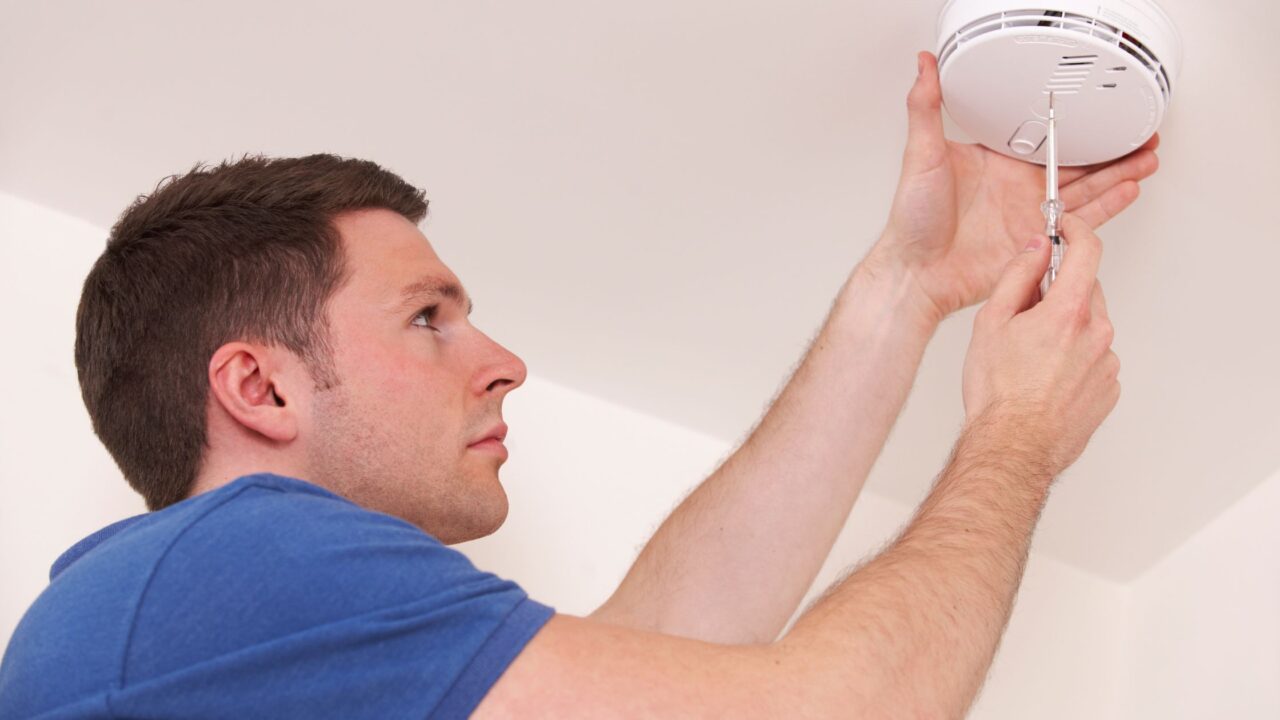
Not all smoke detectors are built the same.
Two alarms can look nearly identical on the ceiling but use completely different sensing technology, power sources, and interconnection systems. Choosing the right type affects how quickly smoke is detected, how often you deal with nuisance alarms, and how well your alarms work together.
In this guide, I’ll break down the main smoke detector types, explain their pros and cons, and show you when it makes sense to mix different types in one home.
If you’re in Northeast Ohio and would rather have a pro evaluate and install the right mix of detectors, Colin Can Help offers smoke and carbon monoxide detector installation services.
The Main Smoke Sensing Technologies
There are three primary smoke detection technologies used in homes today.
Ionization Smoke Alarms
Ionization alarms use a small internal sensor that reacts quickly to tiny combustion particles from fast-flaming fires.
Typically better at detecting:
- Fast-moving, open-flame fires
- Fires involving paper, grease, or flammable liquids
Pros: Generally affordable, widely available, fast response to flaming fires.
Cons: More prone to nuisance alarms near kitchens, sensitive to cooking smoke, less responsive to slow smoldering fires.
Photoelectric Smoke Alarms
Photoelectric alarms use a light beam inside a sensing chamber. When smoke particles scatter that light, the alarm triggers.
Typically better at detecting:
- Slow, smoldering fires
- Upholstery fires
- Electrical fires
- Heavy smoke buildup
Pros: Fewer nuisance alarms near kitchens, better at detecting smoky conditions early, often preferred for hallways and living spaces.
Cons: Slightly higher cost than basic ionization units.
Dual-Sensor Smoke Alarms (Ionization + Photoelectric)
These combine both sensing technologies into one unit for broader fire detection coverage.
Pros: Detects both flaming and smoldering fires, good upgrade choice, simplifies decision-making.
Cons: Higher cost, not always necessary in every location.
Best for: Hallways outside bedrooms, homes where you want simplified coverage, people who do not want to mix technologies manually.
Looking for approved smoke detectors across all three types? Browse the Approved Smoke Detectors collection at Lowe’s for options that cover battery-powered, hardwired, and combo units.
Power and Wiring Options
Beyond sensing type, detectors differ in how they are powered and connected.
Battery-Powered (Replaceable Battery)
Pros: Easy DIY installation, flexible placement, ideal for older homes without wiring, inexpensive upfront.
Cons: Requires battery changes, low-battery chirps if neglected, not interconnected unless specifically designed to be.
Best for: Adding coverage in older homes, simple upgrades, apartments.
10-Year Sealed Battery Smoke Alarms
These use a sealed lithium battery designed to last the life of the alarm.
Pros: No annual battery changes, tamper-resistant, fewer middle-of-the-night chirps, great for rentals or high ceilings.
Cons: Entire unit must be replaced at end of life, higher upfront cost.
We have a full deep-dive on 10-year sealed smoke alarms if you want a more detailed comparison.
Hardwired Smoke Alarms
Hardwired alarms connect to your home’s electrical system and typically include battery backup.
Pros: Reliable power source, often interconnected, no routine battery swaps (except backup).
Cons: Installation complexity, wiring compatibility issues when replacing, usually not a casual DIY project.
For more on installation, see our guide on whether you can install a smoke detector yourself.
Interconnected Systems (Wired or Wireless)
With interconnected alarms, when one goes off, they all go off. This is extremely valuable in multi-level homes, larger homes, and homes where bedrooms are far from the source of fire.
There are two main types:
- Hardwired interconnect
- Wireless interconnect (great for retrofits)
Wireless interconnect systems are a strong upgrade option in older homes.
Combination Smoke/CO Detectors
These units detect both smoke and carbon monoxide.
Pros: Fewer devices on ceilings, ideal for hallways outside bedrooms, simplifies installation in some areas.
Cons: Entire unit replaced if either sensor reaches end of life, not ideal for every single location.
Keep in mind that carbon monoxide placement rules still apply. Review the CO detector placement guide to ensure correct positioning.
For more on CO detector options, see our carbon monoxide detector guide.
Smart Smoke Detectors
Smart smoke alarms connect to Wi-Fi and send alerts to your phone. Features may include remote alerts, self-testing, voice alerts, and smart home integration.
Pros: Remote awareness when traveling, app-based status checks, often includes self-diagnostics.
Cons: Higher cost, Wi-Fi dependent, more setup required.
Best for: Tech-comfortable homeowners, frequent travelers, and landlords managing multiple properties.
Matching Detector Types to Locations and Needs
Simple Decision Rules
- Near kitchens: Consider photoelectric or smart detectors designed to reduce nuisance alarms.
- Hallways outside bedrooms: Dual-sensor or combo smoke/CO units are strong choices.
- Older home with no wiring: Battery-powered or 10-year sealed battery units.
- Newer wired home: Hardwired interconnected smoke or smoke/CO units.
- Multi-level home: Strongly consider interconnected alarms.
For guidance on exact locations, see our room-by-room smoke detector placement guide.
When DIY Is OK vs When to Call a Pro
DIY Is Usually Fine For:
- Replacing like-for-like battery units
- Adding standalone battery alarms
- Mounting detectors in accessible locations
Call a Pro If:
- You are replacing hardwired units
- You want full interconnection
- You are mixing technologies across multiple levels
- You are unsure about layout coverage
If you are in Northeast Ohio, Colin Can Help can recommend the right mix of smoke and combo detectors for your home and install them properly.
Shop Smoke Detectors
Ready to upgrade? The Approved Smoke Detectors storefront at Lowe’s includes a curated selection of battery-powered and hardwired smoke alarms that cover the detector types discussed in this guide. Whether you need a simple battery replacement unit or a hardwired interconnected alarm, these are vetted options worth considering.
Next Steps
Now that you understand the smoke detector types:
- Review the smoke detector placement guide to ensure correct locations
- Read the CO detector types guide to complete gas protection
- Check the manufacture date and technology of your current alarms
- Plan upgrades where needed
Most homeowners have a mix of outdated units, mismatched technologies, and partial coverage. This is your chance to fix that with the right detector in every room.
For a complete overview of smoke and CO detector safety, visit the Colin Can Help smoke and carbon monoxide detector guide.

Scan to join our Loyalty Program, get a free coupon for your next service, and stay up to date on our services and articles.
Affiliate Note
Some of the links in this article may be affiliate links. That simply means if you choose to buy through them, I may earn a small commission at no extra cost to you. I only recommend products I trust and would feel comfortable installing in my own home or a client’s home.
If you try something I recommended and it turns out to be anything less than a five-star experience, please let me know. I always want these recommendations to be genuinely helpful.