
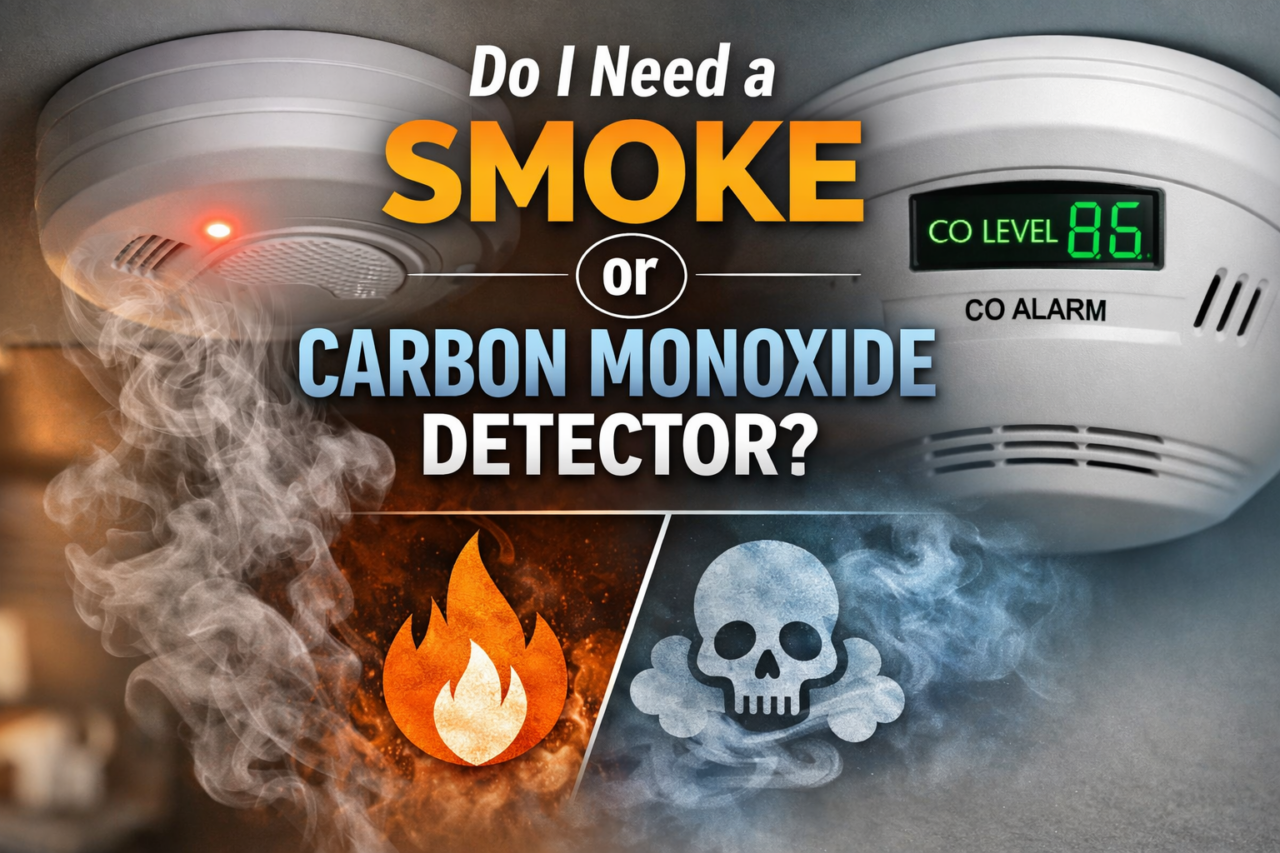
Carbon monoxide (CO) is a colorless, odorless gas that can build up inside your home without warning. It comes from incomplete combustion in things like:
- Gas furnaces
- Water heaters
- Fireplaces
- Gas stoves
- Attached garages
- Generators
You cannot see or smell CO. A detector is the only reliable way to know it’s present.
This article focuses on the types of carbon monoxide detectors available and how to choose the right format for your home. If you’re looking for exact placement guidance, read the CO detector placement guide. This guide is about choosing the right device.
If you’re in Northeast Ohio and would rather have a professional evaluate your setup and install the right CO detectors for you, Colin Can Help offers that service. But whether you DIY or hire a pro, this breakdown will help you make an informed decision.
Core Functions All CO Detectors Should Have
No matter the type, every CO detector should:
- Sense carbon monoxide levels in the air
- Sound a loud audible alarm when dangerous levels are detected
- Meet recognized safety testing standards (look for a nationally recognized testing label like UL listed)
Some models include additional features such as:
- Digital displays showing parts per million (ppm)
- Peak level memory
- End-of-life alerts
- Battery backup
The difference between models is not whether they detect CO. It’s how they are powered, mounted, connected, and what features they include.
Main Types of CO Detectors by Power and Form Factor
Plug-In CO Detectors (With or Without Battery Backup)
These plug directly into a standard wall outlet.
Pros:
- Very easy to install
- No mounting required
- Portable within the home
- Often include digital displays
- Some include battery backup for outages
Cons:
- Limited to outlet locations
- May be unplugged accidentally
- Outlet height may not be ideal for optimal placement
Best for: Apartments, hallways near bedrooms, renters, and homeowners wanting simple installation.
Battery-Powered CO Detectors
These are standalone, wall-mounted units powered by replaceable batteries.
Pros:
- Flexible placement anywhere needed
- Continue working during power outages
- Ideal for homes without convenient outlets
Cons:
- Require battery changes
- Risk of dead batteries if neglected
Best for: Older homes, areas without outlets, basements near furnaces, and supplemental coverage.
10-Year Sealed Battery CO Detectors
These units use a sealed lithium battery designed to last the life of the detector.
Pros:
- No annual battery changes
- Tamper-resistant
- Fewer late-night low-battery chirps
- Ideal for rentals
Cons:
- Entire unit must be replaced at end of life
- Higher upfront cost
For a deeper comparison of sealed vs standard battery options, see our 10-year sealed battery smoke alarm guide. The same logic applies to CO detectors.
Hardwired CO or Combo CO/Smoke Detectors
These connect directly to your home’s electrical system and typically include battery backup.
Pros:
- Reliable constant power
- Often part of interconnected systems
- No dependency on replaceable batteries for primary power
Cons:
- Installation complexity
- Not a typical DIY project
- Must match existing wiring configuration
Best for: New construction, major remodels, and whole-home upgrades.
Combination Smoke/CO Detectors
These units detect both smoke and carbon monoxide.
Pros:
- Fewer devices on ceilings
- Simplifies installation in certain areas
- Good for hallways outside bedrooms
Cons:
- Entire unit replaced when either sensor ages out
- May not be ideal for every appliance-area location
Combo units are especially useful in hallways outside sleeping areas and bedrooms. However, CO placement rules still apply. Read the CO placement guide to ensure you put combo units in the correct locations.
For a full breakdown of combination detector options, see our smoke detector types guide.
The Approved Smoke Detectors collection at Lowe’s includes battery-powered and hardwired combo smoke/CO units across multiple price points. These are a good starting point when deciding what to buy.
Smart CO Detectors
Smart CO detectors connect to Wi-Fi and send alerts to your phone.
Features may include:
- Remote alerts
- App-based status checks
- Voice alerts identifying location
- Integration with smart home systems
Pros:
- Alerts when you’re away from home
- Remote monitoring
- Some combine smoke and CO detection
- Useful for landlords managing multiple properties
Cons:
- Higher cost
- Wi-Fi dependence
- More setup steps
Extra Features to Consider
Digital Display vs No Display
Some CO detectors include a digital screen showing real-time or recent CO levels in parts per million (ppm). This adds peace of mind and helps diagnose appliance issues.
Peak Level Memory
Some models store the highest CO level detected since last reset. This can help identify furnace startup issues, intermittent garage exposure, or venting problems.
End-of-Life Alerts
CO sensors do not last forever. Most have a 5-7 year lifespan. Look for models that chirp when they reach end of life and clearly distinguish low battery from sensor expiration. To stay on top of testing and replacement schedules, see our CO detector maintenance and testing guide.
Matching CO Detector Types to Real-World Scenarios
Scenario 1: Small Apartment With Gas Stove and Gas Furnace
Plug-in CO detector with battery backup in hallway near bedrooms. Optional battery unit near furnace area.
Scenario 2: Single-Family Home With Gas Furnace in Basement and Attached Garage
Battery or hardwired CO detector near furnace in basement. CO detector near door connecting garage to house. CO detector in hallway outside bedrooms.
Scenario 3: All-Electric Home With Attached Garage
Even without gas appliances, install CO detector near bedrooms and near door from garage to home. Vehicle exhaust remains a risk.
Scenario 4: Rental Property
10-year sealed battery CO detectors or plug-in units with battery backup. Focus on tamper resistance and reduced maintenance.
When DIY Is OK vs When to Call a Pro
DIY Is Usually Fine For:
- Plug-in CO detectors
- Battery-powered units
- Adding coverage in easy-to-reach locations
For more information, see our article on whether you can install a smoke detector yourself – the same guidance applies to standalone CO detectors.
Call a Pro If:
- Installing hardwired or interconnected systems
- Coordinating combo smoke/CO units
- Planning coverage in large or complex homes
- Preparing for inspection or sale
If you are in Northeast Ohio, Colin Can Help can recommend the right CO detectors for your home and install them in the correct locations.
Shop CO Detectors at Lowe’s
Ready to pick a CO detector? Browse the Approved Smoke Detectors storefront at Lowe’s for a curated selection of battery, hardwired, and combo smoke/CO units that fit a range of home types and budgets.
Next Steps
Now that you understand the types:
- Read the CO detector placement guide to ensure proper locations
- Review the smoke detector types guide for a complete protection plan
- Check out our maintenance and testing guide to keep your CO detectors working properly
- Check the age and type of your current CO detectors
- Plan upgrades if needed
Carbon monoxide protection is not complicated, but choosing the right format for your home makes a big difference. The right detector in the right location turns a device on the wall into real safety coverage.
For a complete overview of smoke and carbon monoxide detector safety, visit the Colin Can Help smoke and carbon monoxide detector guide.

Scan to join our Loyalty Program, get a free coupon for your next service, and stay up to date on our services and articles.
Affiliate Note
Some of the links in this article may be affiliate links. That simply means if you choose to buy through them, I may earn a small commission at no extra cost to you. I only recommend products I trust and would feel comfortable installing in my own home or a client’s home.
If you try something I recommended and it turns out to be anything less than a five-star experience, please let me know. I always want these recommendations to be genuinely helpful.