
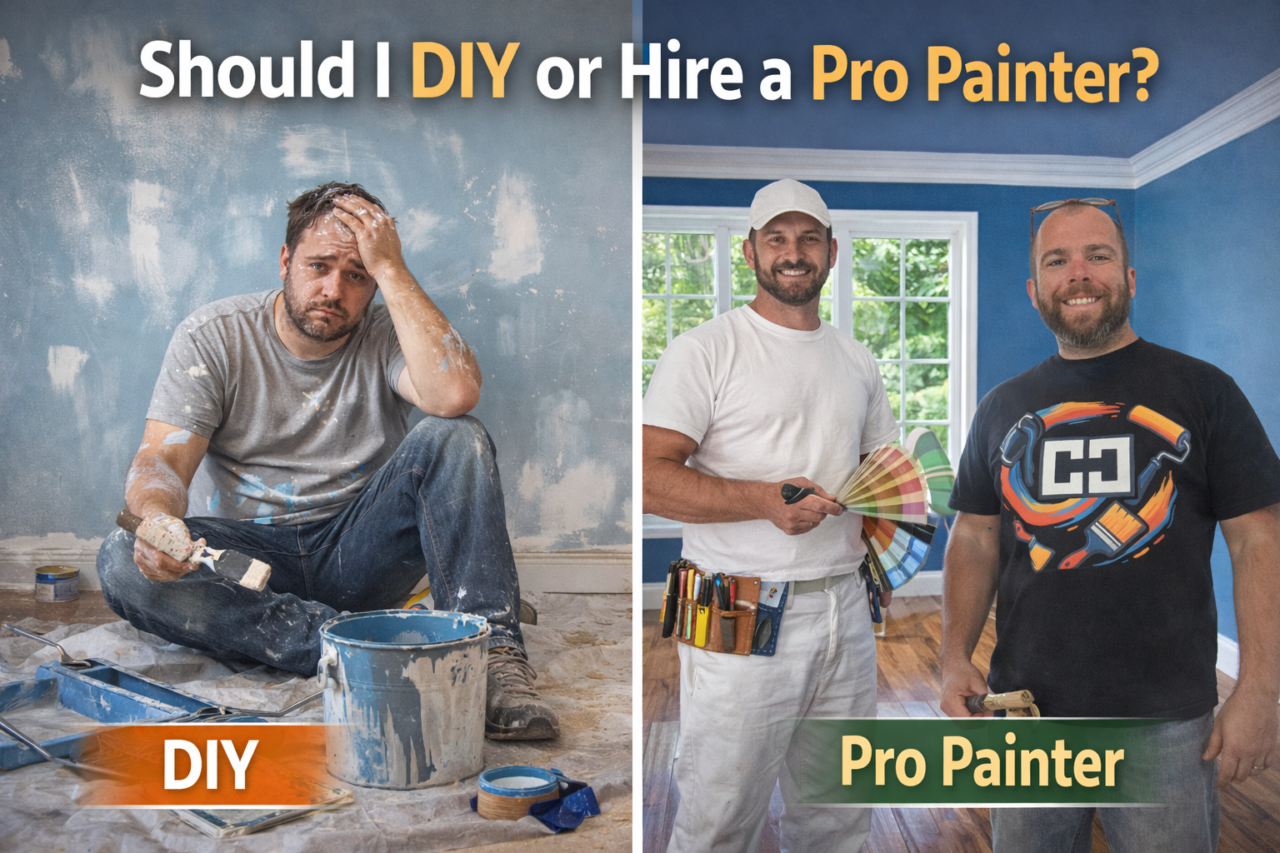
Painting is one of the most common home improvement projects homeowners take on — and one of the most debated. Do you grab a roller and save some money, or do you call in a professional and get it done right the first time?
The honest answer: it depends on your project, your skill level, your schedule, and what matters most to you. This guide gives you a straight, unbiased breakdown of both paths so you can make the decision that makes the most sense for your home.
What DIY Painting Actually Involves
Painting a room seems like it would take an hour or two and anyone can do it. This is far from how painting jobs actually go. Before deciding to go the DIY route, it helps to understand everything that goes into a quality paint job. Picking up a brush is the easy part.
Surface Preparation
This is where most DIY paint jobs fall short. A professional finish starts long before any paint is applied.
Proper prep includes:
-
Cleaning walls to remove dust, grease, and residue
-
Filling nail holes, cracks, and surface imperfections with spackle or joint compound
-
Sanding patched areas smooth
-
Taping off trim, outlets, ceilings, and edges
-
Priming bare surfaces, stained areas, or dramatic color changes
Skipping or rushing prep is the number one reason DIY paint jobs look amateur or not last as long as they should. It sounds cliché, but the paint job is only as good as the surface underneath it.
The Right Materials
Not all paint and supplies are equal. To get a clean, durable result you will need:
-
Quality paint in the correct sheen for the surface (flat, eggshell, satin, semi-gloss)
-
Primer (separate or built-in, depending on the situation)
-
Quality brushes and rollers that do not leave lint or brush marks
-
Painter’s tape, drop cloths, roller trays, and extension poles
-
Proper lighting to catch missed spots
Budget paints and cheap rollers will cost you more in the long run through extra coats and visible imperfections. Check out my Lowes Storefront where I list all my recommended materials for a pro level DIY paint job.
The Time Commitment
DIY painting takes significantly longer than most homeowners expect. A single bedroom can take a full weekend once you factor in:
-
Moving and covering furniture
-
Washing and prepping walls
-
Applying primer
-
Cutting in edges by hand
-
Rolling walls in multiple coats
-
Waiting for dry time between coats
-
Cleaning up and touching up
A project that takes a professional crew one day can take a first-time DIYer an entire weekend or longer.
The Physical Demand
Painting is physically demanding. I consider myself to be in great shape, I do physical work every day. But even with conditioning, the day after a big painting job I can always feel it in muscle areas I didn’t even know I had.
Rolling ceilings, cutting in corners, working on ladders, and crouching along baseboards for hours takes a toll. Fatigue leads to mistakes, drips, and uneven coverage.
See the Colin Can Help Guide to Interior Painting
What You Get When You Hire a Professional Painter
A professional painter brings more than just labor. Here is what you are actually paying for.
Experience and Technique
A seasoned painter has developed techniques through years of repetition. Cutting a clean line without tape, avoiding lap marks, back-rolling for even texture, and knowing how different paints behave. These are skills built over time. The result is a noticeably cleaner, more polished finish than most homeowners can achieve on their own.
Efficient Surface Preparation
Professionals know that prep is everything. They come equipped with the knowledge to identify and address issues like:
-
Water stains that will bleed through without proper sealing
-
Peeling paint that needs to be stripped before recoating
-
Glossy surfaces that need sanding or deglosser for adhesion
-
Damaged drywall that needs patching before painting
A good pro will not just paint over problems — they will fix them first.
Speed
What takes a homeowner a full weekend often takes a professional crew one day or less. Professionals work efficiently without sacrificing quality. Less disruption to your household means rooms are back to normal faster.
The Right Tools for the Job
Professionals show up with commercial-grade equipment: sprayers, extension poles, scaffolding, quality brushes, and industrial drop cloths. They are not borrowing a ladder from the garage and making do. The right tools produce better coverage and a cleaner finish.
A Clean Worksite
Experienced painters protect your floors, furniture, and fixtures. They tape off surfaces correctly, cover everything that needs covering, and clean up when the job is done. You do not have to spend your Sunday picking dried paint flecks off your hardwood floors.
Accountability
When you hire a reputable contractor, you have someone accountable for the final result. If something is missed or a problem shows up, you have a person to call. With DIY, any issues are entirely on you.
Honest Cost Comparison
DIY Costs
DIY painting is not free. Out-of-pocket costs typically include:
-
Paint: $50–$120 per gallon depending on brand and quality
-
Primer: $25–$45 per gallon
-
Brushes, rollers, trays, and covers: $30–$80
-
Painter’s tape and drop cloths: $20–$40
-
Spackle, sandpaper, and other prep materials: $15–$30
For a standard bedroom, a homeowner might spend $150–$300 on materials alone, not counting their own time.
Professional Costs
Labor costs vary by region, project size, and complexity. Generally speaking:
-
A single room: $500–$1,000 depending on size and prep needed
-
A full interior: $2,000–$6,000+ for an average home
-
Exterior painting: varies widely based on square footage and siding type
Professional quotes typically include labor, materials, and prep. Get itemized quotes so you understand what is and is not included.
The True Cost of DIY
When calculating DIY savings, homeowners often forget to account for their own time. If you spend 16 hours on a room and you value your time at $30 per hour, that is $480 in personal time… before materials. Factor in a potential redo if results are unsatisfactory and the savings may narrow considerably.
When DIY Painting Makes Sense
DIY is a legitimate option in the right circumstances. Consider doing it yourself if:
-
You are painting a small, simple space like a powder room or laundry room
-
You have painted before and are comfortable with prep and technique
-
Budget is a primary constraint and you have the time to invest
-
You enjoy hands-on projects and are not in a rush
-
The surfaces are in good condition and need minimal prep
-
You are doing an accent wall or minor refresh, not a full room transformation
When Hiring a Painter Makes More Sense
Consider bringing in a professional if:
-
You are painting multiple rooms or a full interior
-
The project involves high ceilings, stairwells, or hard-to-reach areas
-
Walls have significant damage, water stains, or texture issues
-
You have limited time and cannot afford to lose a weekend
-
You want a clean, polished result with crisp lines and even finish
-
You are preparing your home for sale or a major occasion
-
You have tried DIY painting before and were not happy with the result
Questions to Ask Before You Decide
Before committing to one path or the other, answer these honestly:
-
How much time do I realistically have? Not just this weekend, but accounting for prep, paint, dry time, and cleanup.
-
What is my skill level? Have I done this before? Was I happy with the result?
-
What is the condition of the walls? Minor touch-up versus full repair changes the complexity significantly.
-
What does a bad result cost me? For a rental property or a home going on the market, a bad paint job can affect value.
-
What is my actual budget? Include both your money and your time.
The Bottom Line
Neither option is universally better. DIY painting can absolutely produce great results when the painter has the skill, time, and patience to do it right. A professional is worth the investment when the project is large, complex, or when your time and the quality of the outcome both matter.
The best paint job is the one that meets your expectations, fits your schedule, and holds up over time — whether you do it yourself or hire someone to do it for you.
If you are in Northeast Ohio and want a professional opinion on your painting project, Colin Can Help offers interior and exterior painting services for homeowners across the area. Reach out for a free consultation.

Scan to join our Loyalty Program, get a free coupon for your next service, and stay up to date on our services and articles.
Affiliate Note
Some of the links in this article may be affiliate links. That simply means if you choose to buy through them, I may earn a small commission at no extra cost to you. I only recommend products I trust and would feel comfortable installing in my own home or a client’s home.
If you try something I recommended and it turns out to be anything less than a five-star experience, please let me know. I always want these recommendations to be genuinely helpful.