
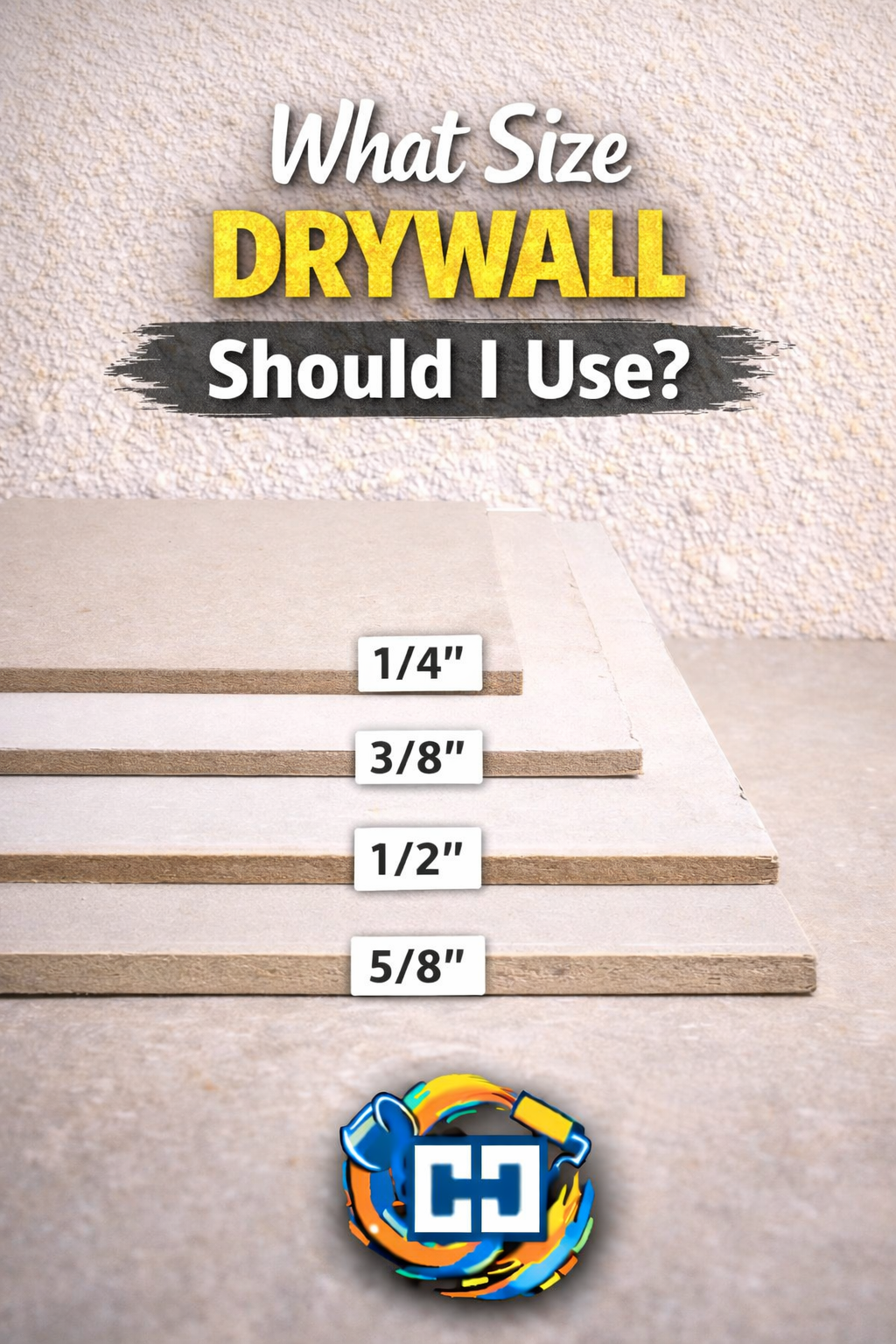
Short Answer:
- For most interior walls in a house, use 1/2-inch drywall.
- For ceilings or areas that require fire resistance, use 5/8-inch drywall.
In bathrooms, kitchens, and basements, the drywall type matters too. Mold-resistant drywall is often worth the small upgrade, even when the thickness stays the same.
That covers 90 percent of residential projects.
Now let’s break down when that changes and why thickness actually matters.
Why Drywall Thickness Matters
Drywall thickness is not just about what is easiest to carry up a flight of stairs. It directly impacts how the finished room performs over time.
The thickness you choose affects:
-
Structural rigidity
-
Resistance to sagging on ceilings
-
Sound dampening between rooms
-
Fire resistance ratings
-
Whether the installation meets local building code
Choosing the wrong thickness can lead to cracked seams, sagging ceilings, failed inspections, or unnecessary extra weight and cost.
In many older Cleveland homes, framing is not perfectly straight and joist spacing is not always ideal. The correct drywall thickness can help compensate for minor irregularities and prevent long-term problems.
If you are building your tool and material list, my full drywall supply setup is here:
https://shoplowes.me/4qXiCjQ
Now let’s break down each drywall thickness and where it makes sense to use it.
1/2-Inch Drywall: The Standard Choice
This is the most common drywall thickness in residential construction.
Where to Use 1/2-Inch Drywall
-
Interior walls
-
Basement finishing
-
Remodeling projects
-
Standard room installations
Why I Use It
- It is lighter and easier to handle.
- It installs easily over studs spaced 16 inches on center.
- For typical bedrooms, living rooms, and hallways, this is what you want.
When It Works Best
If your studs are properly spaced and you are not dealing with fire-rated assemblies, 1/2-inch drywall is the right call.
It balances strength and weight.
5/8-Inch Drywall: Stronger and More Fire Resistant
5/8-inch drywall is thicker, heavier, and stiffer.
Where to Use 5/8-Inch Drywall
-
Ceilings
-
Garage walls
-
Shared walls
-
Fire-rated assemblies
-
Areas where sagging is a concern
Why I Use It
On ceilings, especially with 24-inch on-center framing, 1/2-inch drywall can sag over time.
5/8-inch drywall resists sagging better.
It is also commonly required by code between a garage and the living space above it.
Fire Rating
Many 5/8-inch drywall panels are Type X, which means they provide a higher fire rating.
If you are finishing a garage or a basement ceiling under living space, check local code requirements.
What About Mold-Resistant Drywall for Bathrooms and Kitchens?
Drywall thickness and drywall type are not the same thing.
You can buy 1/2-inch drywall that is mold resistant. You can also buy 5/8-inch drywall that is mold resistant. The thickness affects strength and sag resistance. The board type affects how well it holds up in humidity.
Where Mold-Resistant Drywall Makes Sense
- Bathrooms (outside the shower area)
- Kitchens
- Laundry rooms
- Basements
- Utility rooms
Important: Mold-Resistant Drywall Is Not Waterproof
Mold-resistant drywall is designed for humid spaces, not direct water. Do not use it inside shower stalls or tub surrounds. Those areas need cement board or a proper waterproof wall system.
What I Use Most Often
In most Northeast Ohio homes, I use mold-resistant 1/2-inch drywall on bathroom and basement walls where humidity is a concern. For ceilings in humid rooms, I consider 5/8-inch if framing spacing or sagging risk is part of the equation.
What About 1/4-Inch Drywall?
1/4-inch drywall is not for walls.
It is typically used for:
-
Bending around curved surfaces
-
Overlaying existing drywall
-
Minor surface repairs
It does not have structural strength.
I rarely use it for standard residential walls.
What Size Drywall Should I Use for Ceilings?
If your ceiling framing is 16 inches on center, 1/2-inch drywall can work.
If it is 24 inches on center, 5/8-inch is safer.
Sagging ceilings are one of the most common problems I see in older homes.
Using thicker drywall prevents that.
What Size Drywall Should I Use for a Garage?
Most garages require 5/8-inch Type X drywall for fire separation.
The garage shares a wall or ceiling with living space. That changes the rules.
Check your local building code before installing.
It is better to do it right the first time than tear it out later.
Does Thicker Drywall Help With Sound?
Yes, slightly.
Thicker drywall:
-
Adds mass
-
Reduces vibration
-
Improves sound dampening
But if sound control is your main goal, you also need insulation and possibly resilient channel or sound-dampening board.
Thickness alone does not solve everything.
Is Thicker Drywall Harder to Install?
Yes.
5/8-inch sheets are heavier.
They are more difficult to lift overhead.
If you are working alone, ceiling installs become much harder.
A drywall lift can help, but weight is still a factor.
For most homeowners working solo, 1/2-inch drywall is easier to manage.
What About Length and Sheet Size?
Drywall commonly comes in:
-
4×8 sheets
- 1/2 inch
- 1/2 inch mold resistant
- 5/8 inch
- 5/8 inch mold resistant
-
4×10 sheets
- 1/2 inch
- 1/2 inch mold resistant
- 5/8 inch
- 5/8 inch mold resistant
-
4×12 sheets
- 1/2 inch
- 1/2 inch mold resistant
- 5/8 inch Fire Resistant
- 5/8 inch mold resistant
Longer sheets reduce seams.
Fewer seams mean less taping and finishing.
If your space allows it and you can handle the weight, longer sheets save finishing time.
But moving 12-foot sheets through stairwells is not fun.
Choose based on access and help available.
Common Mistakes When Choosing Drywall Thickness
Using 1/2-inch drywall on a 24-inch ceiling span
It can sag over time.
Ignoring garage fire code requirements
That can fail inspection.
Buying thicker drywall for every wall unnecessarily
It adds weight without benefit.
Thickness should match purpose.
What I Use on Most Jobs
In most Cleveland homes:
-
1/2-inch drywall for interior walls
-
5/8-inch drywall for ceilings with wider spans
-
5/8-inch Type X for garages
That covers almost everything I see.
If you are unsure what tools you need for hanging it, start here:
[INTERNAL LINK]
Final Advice
If you are asking what size drywall you should use, keep it simple.
1/2-inch for most walls.
5/8-inch for ceilings and fire-rated areas.
1/4-inch only for specialty situations.
Match thickness to structure, not convenience.
And if you are in Northeast Ohio and want drywall installed correctly the first time, Colin Can Help handles drywall installation and repair professionally.