
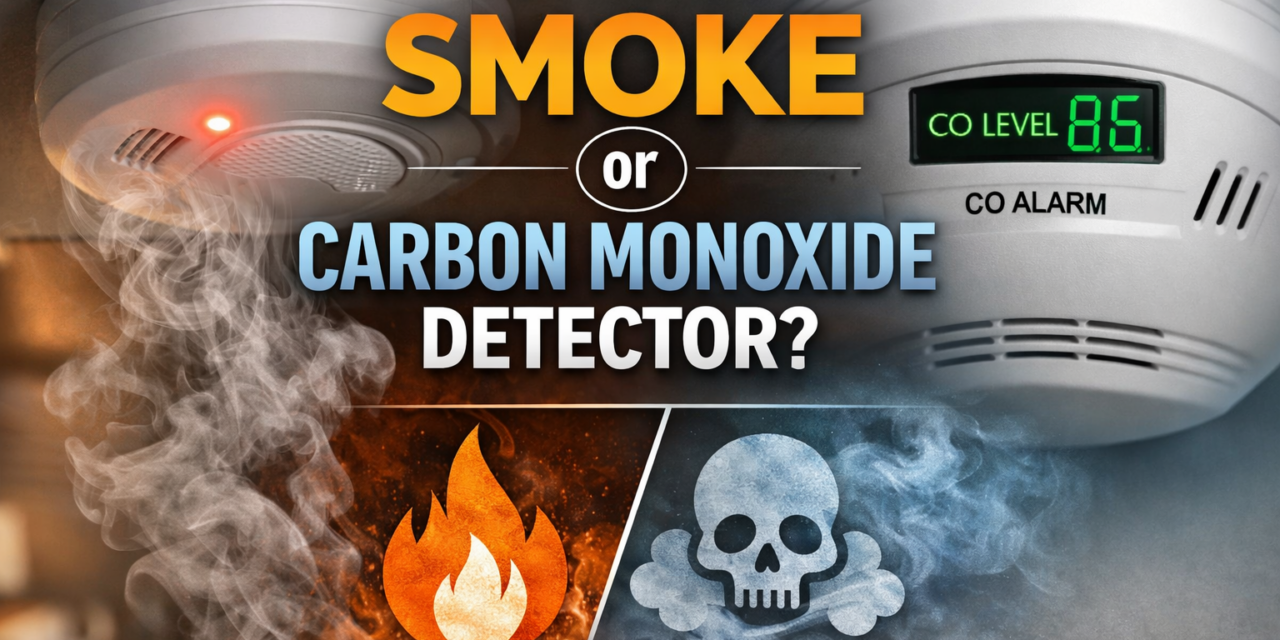
Living areas are where many house fires actually start, even if they aren’t where people sleep. Smoke detectors in living rooms, family rooms, and shared spaces provide the earliest possible warning, buying critical time before smoke spreads into bedrooms or stairways. Proper placement in these areas helps detect fires sooner, reduce property damage, and protect...

Most deadly house fires start where you’re not looking — in the basement. A Cleveland Heights family learned this the hard way when their basement furnace malfunction filled their home with smoke while they slept. They survived only because a smoke detector in the basement gave them a 3-minute head start to escape. Basement smoke...

Carbon monoxide detectors save lives only when they’re placed where people will actually be exposed while sleeping or living, not just wherever there’s an outlet or extra wall space. CO is invisible, odorless, and often produced by everyday appliances that appear to be working normally. The most effective protection comes from understanding how carbon monoxide...

Ice dams form when warm air from your home melts roof snow that refreezes at the eaves, causing water to back up under shingles and leak inside. To prevent them, focus on attic insulation, ventilation, and sealing air leaks — not just roof raking.Before snow hits Northeast Ohio, inspect your roof, clean gutters, and improve...

Things You Should Never Put in Your Toilet

Even the best toilets aren’t built to handle everything we send down them. Many so-called “flushable” products don’t break down fast enough, leading to clogs, costly repairs, or damage to your sewer or septic system. If it’s not toilet paper or human waste, don’t flush it. From wipes and paper towels to kitty litter and...

Why Pressure Treated Wood Is a Risk for Pets

Pressure-treated wood is not safe for pets to chew or ingest. It contains chemical preservatives designed to resist rot and insects, but those same compounds can cause vomiting, diarrhea, lethargy, or worse if eaten. For dog houses, rabbit hutches, or chicken coops, choose untreated or naturally rot-resistant woods like cedar or pine instead. If your...

Key Takeaway: No — you should not use pressure treated wood indoors. Pressure treated lumber is infused with chemical preservatives to resist rot and insects, making it great for decks, fences, and landscaping. But those same chemicals can off-gas or leach into the air and dust of your home, which isn’t safe for framing, shelving,...

Colin Can Help LLC, 2026 © All Rights Reserved